



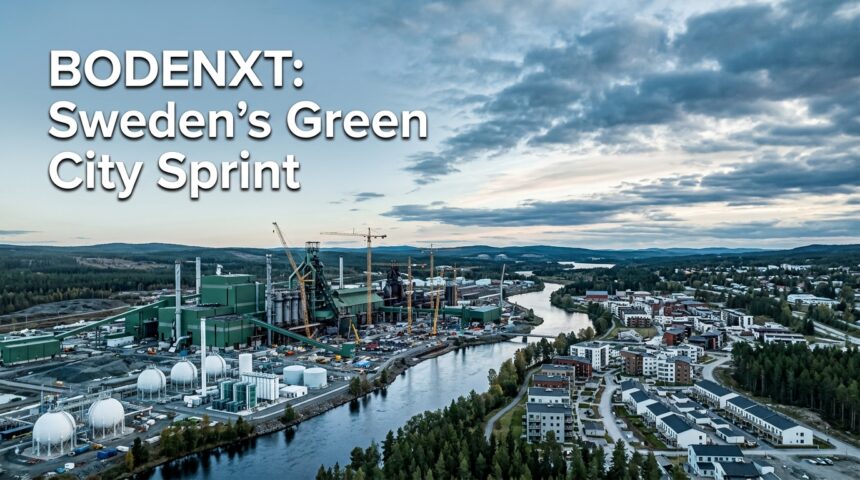
If you’ve searched “bodenxt” recently, you’ve probably landed on two very different explanations. One is real: a municipal transformation program in northern Sweden. The other is a mess of vague, recycled “AI platform” filler that’s been scraped and rewritten by content farms chasing search traffic on an unfamiliar name. This article sticks to the first one, because it’s the one with actual substance.
Bodenxt is the coordination platform run by the Municipality of Boden to manage a genuinely unusual problem. How do you absorb roughly two decades’ worth of urban growth in two or three years, without your housing stock, schools, water system, and labor market falling apart under the strain? That’s not a hypothetical. It’s what’s happening right now in Norrbotten, the sparsely populated region in Sweden’s far north, where the town of Boden itself is home to fewer than 17,000 people.
The Steel Plant That Started It
The trigger was industrial, not political. In February 2022, a company then called H2 Green Steel, now operating as Stegra, announced it would build one of the world’s first large scale steel plants powered by green hydrogen instead of coking coal. Conventional steelmaking is a genuinely dirty process. It’s responsible for something like 7 to 8 percent of global CO2 emissions. Stegra’s pitch was to swap coal for hydrogen produced from renewable electricity, cutting emissions from the process by up to 95 percent.
Boden won the site. The plant sits inside Boden Industrial Park, a 550 hectare zone that’s larger than Stockholm’s Kungsholmen district. For scale, that’s over a thousand football pitches of industrial land, much of it built from scratch. At full production, targeted for mid 2026 onward, the plant is expected to output roughly 5 million tonnes of green steel annually and support close to 2,000 direct jobs, with modelling projecting somewhere north of 40 billion SEK added to Swedish GDP by 2035.
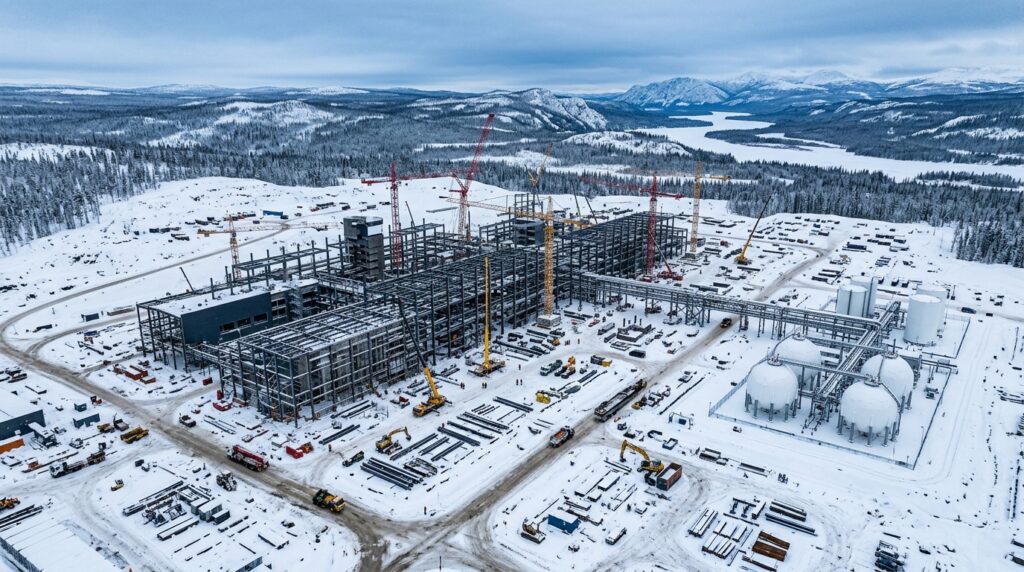
None of that happens on its own. A plant of that scale pulls in construction crews, engineers, suppliers, and families fast. That’s the gap Bodenxt was built to close.
Bodenxt Isn’t The Steel Plant, It’s The Plumbing Around It
This is the point most explainers get wrong. Bodenxt is not Stegra, and it’s not a piece of software. It’s the municipality’s own coordination and communication framework, closer to a city operating system than a product. Its job is to keep housing, schools, transport, utilities, and workforce planning moving in sync with the industrial buildout, rather than lagging years behind it the way infrastructure usually does after a big new employer shows up in a small city.
The name itself is straightforward once you see it. “Boden” plus “next,” the city’s own shorthand for its next chapter. Practically, the initiative runs across five connected work streams.
Skills supply. Boden needs workers who don’t exist locally yet, welders, electricians, hydrogen engineers, logistics staff. The response includes new vocational and engineering programs, and local schools adding tracks like the International Baccalaureate to appeal to relocating international families.
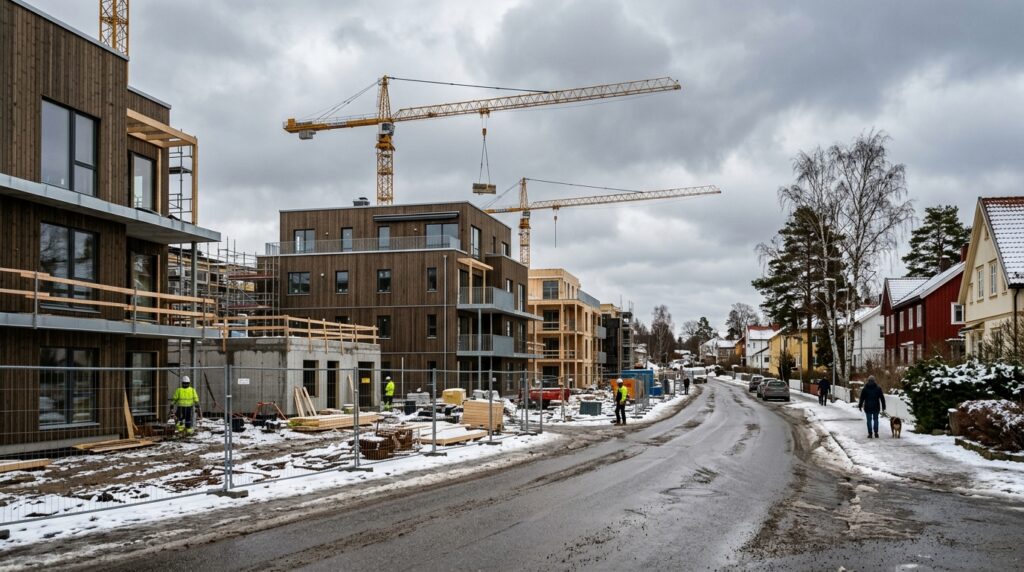
Housing. The municipality has set a target of roughly 33,000 residents by 2030, up from a much smaller base. New neighborhoods are being planned with schools and clinics built in from the start rather than added years later, and with fossil free energy standards baked into construction.
Business development. Beyond Stegra itself, Boden Business Park works to pull in suppliers and startups that can service the industrial park, with Vinnova innovation grants of up to 400,000 SEK per business available to smaller firms trying to get a foothold.
Above ground infrastructure. A new rail link connecting the town center to the industrial park, about 6 kilometers, with ten bridges, was completed in under two years, which is fast by Swedish infrastructure standards.
Below ground infrastructure. The unglamorous half of the story: water, wastewater, power grids, and hydrogen pipelines. Boden has put hundreds of millions of SEK into expanding treatment capacity at its Svedjan facility alone, because none of the visible growth works if the pipes underneath can’t keep up.
Why Compressed Growth Is Genuinely Hard
Most cities grow in sequence. Population rises, then housing catches up, then schools get built, then transit expands to match. Boden doesn’t have that luxury. Stegra’s hiring timeline doesn’t wait for zoning approvals, and workers showing up for construction jobs need somewhere to live this year, not in 2031.
That’s the practical argument for treating Bodenxt as infrastructure rather than marketing. Compressed development means running housing, schools, transit, and workforce training in parallel instead of in sequence, which is coordination heavy and expensive up front, but the alternative is a boomtown with no capacity to absorb the boom. Norrbotten has seen this pattern before, just not at this speed: single industry towns that grew fast and then struggled with housing shortages and strained services because planning lagged behind hiring.
The Circular Economy Angle Nobody Expects
One detail that tends to get buried is that the industrial park isn’t just a steel plant with houses nearby. Stegra’s process generates a lot of excess heat, and Boden is capturing it to run large scale greenhouses on site, meaning year round food production in a region where growing seasons are famously short. It’s a modest piece of the puzzle next to the headline steel numbers, but it’s a good example of the kind of second order planning that separates a coordinated transformation from a company town that just happens to be growing.
If you want a completely different kind of practical home upgrade while your own space evolves, this guide to Lamps4U choosing the right lighting for a home is worth a look, especially for anyone furnishing a new build during a fast growing period like this.
What Success Actually Looks Like
The municipality isn’t measuring this purely in tonnes of steel or SEK of GDP. A February 2026 resident survey reportedly found around 9 in 10 people in Boden feel safe, a metric the city tracks specifically because rapid population growth is a known stressor on community cohesion, not just infrastructure. Safety Points, local crisis and information hubs, and a public discussion series called Bodenxt Talks, where officials, Stegra executives, and residents discuss what’s actually happening, are both aimed at the same goal: keeping trust intact while the physical city changes underneath people.
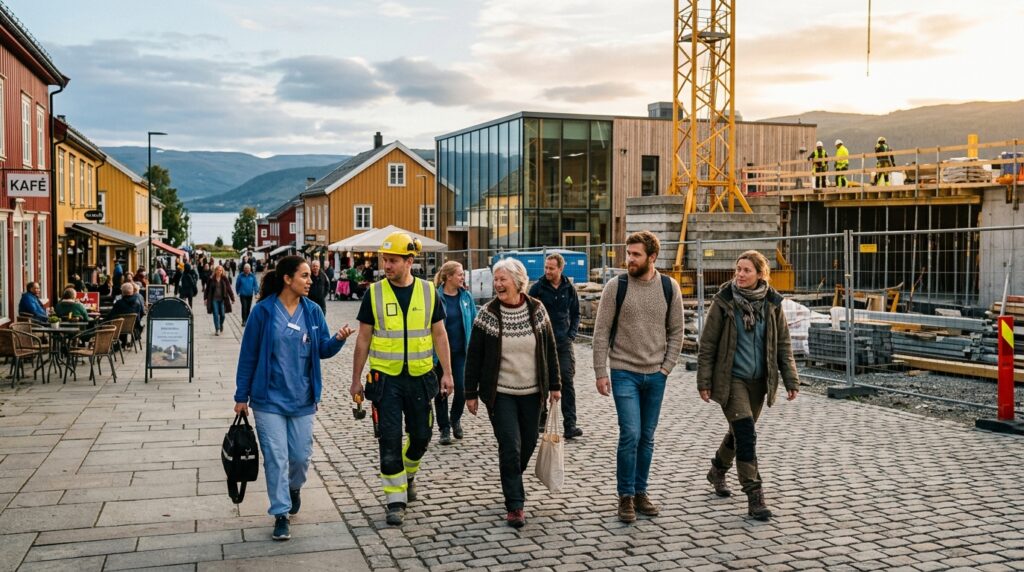
That’s arguably the more interesting story than the engineering. Plenty of regions have chased a single mega project and gotten the economics right while the social fabric frayed, new arrivals and longtime residents never quite integrating, services stretched thin, resentment building. Boden’s bet is that treating community trust as a metric worth tracking, alongside jobs and GDP, is what determines whether this kind of compressed growth actually sticks for the next generation rather than boomeranging.
The Honest Risks
None of this is guaranteed to land cleanly. Green steel demand and pricing depend on global markets that Boden doesn’t control. Energy costs in Sweden have been volatile. Attracting and retaining international workers and their families, not just recruiting them for a two year build phase, is a harder problem than filling construction jobs. And running five parallel work streams at once means any one of them slipping puts pressure on the others. Boden’s own planning documents treat these as open challenges, not solved problems, which is a reasonably honest way to frame a project still mid build.
Where This Leaves Things
Bodenxt is best understood as a coordination bet, that a small northern Swedish city can absorb two decades of industrial scale growth in a handful of years without breaking its housing market, its schools, or its sense of itself as a community, provided the planning runs in parallel rather than catching up after the fact. The steel plant gets the headlines. The wastewater capacity, the school seats, and the resident trust surveys are where the project will actually be judged.
If it works, it’s less a Swedish curiosity than a template, proof that the unglamorous, coordination heavy parts of urban planning are what determine whether a green industrial boom becomes a livable city or just a bigger, more crowded version of the same problems it was supposed to solve.
Frequently Asked Questions
What does Bodenxt mean?
It’s a combination of “Boden,” the town’s name, and “next,” referring to the municipality’s plan for its next stage of growth.
Is Bodenxt a company or a piece of software?
No. It’s a coordination initiative run by the Municipality of Boden. It manages housing, skills, business development, and infrastructure planning around the town’s industrial expansion. It isn’t a commercial product.
What is Stegra and how does it relate to Bodenxt?
Stegra, formerly H2 Green Steel, is the company building a large scale green steel plant in Boden Industrial Park. Its arrival is the main driver behind the rapid growth that Bodenxt was created to manage.
How many people is Boden expecting to grow by?
The municipality has set a target of around 33,000 residents by 2030, a significant jump from its current population.
When will the Stegra plant be fully operational?
Production was targeted to begin around mid 2026, with full scale output expected later in the decade.
Is this growth guaranteed to succeed?
No. It depends on global steel demand, energy prices, and Boden’s ability to keep housing, schools, and infrastructure moving at the same pace as hiring. The municipality itself treats these as ongoing challenges rather than settled outcomes.
For more quality, informative content, visit writewhiz