



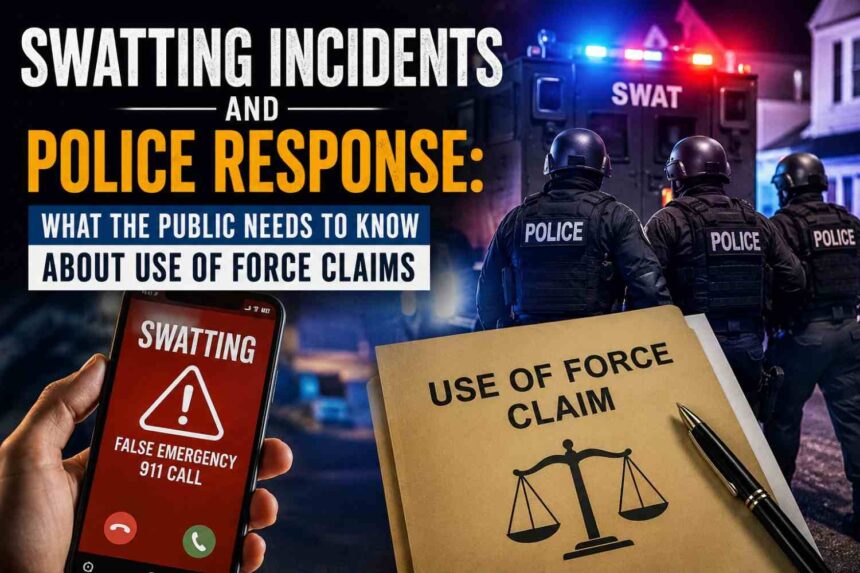
Swatting has become one of the most dangerous forms of online harassment. A person makes a false emergency call, often claiming an active shooter or violent crime is happening at a specific address. Police respond with heavy force, and innocent people can get injured or killed.
In recent years, several high-profile cases have raised serious questions about how law enforcement handles these calls. One of the most closely watched recent examples involves a $176 million notice of claim filed against the Pima County Sheriff’s Department in Arizona.
According to detailed reporting, a young man named Axeel Melendez was left paralyzed after deputies responded to a false emergency call at his Tucson home in April 2026. He had previously reported threats of a swatting attack. Despite that warning, deputies forced entry and opened fire when they saw him holding a legally owned firearm. Full details of the claim, the sequence of events, and the legal process can be found in this comprehensive overview: Pima County Sheriff Lawsuit: $176M Claim Details.
Why Swatting Cases Are So Complex
When officers respond to what they believe is a real emergency, they often treat the situation as high-risk. Courts generally evaluate use of force based on what the officers reasonably believed at the time, not with the benefit of hindsight.
However, when prior warnings exist (as alleged in the Melendez claim), questions arise about verification steps. Did dispatch cross-check earlier reports? Were known phone numbers called? Was a more deliberate approach possible?
These questions sit at the heart of many civil claims involving police response to false emergency calls.
Arizona’s Notice of Claim Process
In Arizona, people who want to sue a public entity or public employee must first file a formal notice of claim. This notice must state a specific dollar amount and provide enough facts for the entity to evaluate the claim. The public entity then has 60 days to respond. Missing the strict deadlines can permanently bar the claim under state law.
Understanding these procedural rules is critical for anyone considering legal action after a police-related incident.
Broader Lessons from Swatting Cases
Similar tragedies have occurred across the United States. In one well-known case, a man in Wichita was fatally shot by police responding to a false call. The city later paid a multimillion-dollar settlement.
Departments that flag known swatting targets in their systems, attempt to contact the resident first, and slow down their approach have reduced harm in some situations. Training and policy updates continue as the tactic spreads.
Why These Cases Matter
Swatting cases highlight the tension between rapid emergency response and the risk of catastrophic error. They also raise important questions about accountability, training, and how departments handle known threats of false calls.
For readers who want a clear, detailed breakdown of the Pima County claims (including the Melendez case and related notices), the full report is available here: Pima County Sheriff Lawsuit details.
For more quality, informative content, visit writewhiz.