



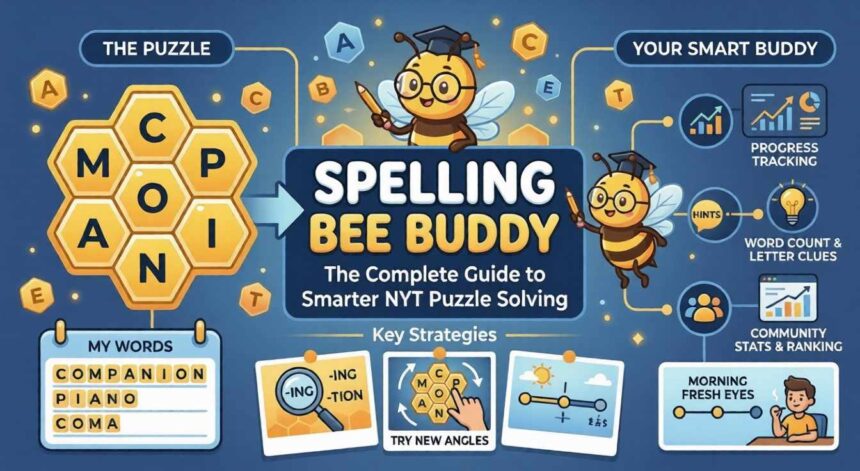
Spelling Bee Buddy: The Complete Guide to Smarter NYT Puzzle Solving
Word games have become a daily habit for millions of puzzle lovers, and the growing popularity of the New York Times Spelling Bee has created demand for tools that make solving more enjoyable and less frustrating. One of the most talked-about helper tools among puzzle enthusiasts is spelling bee buddy, a companion feature designed to help players improve their scores, discover hidden words, and better understand puzzle patterns without ruining the challenge entirely.
Whether you are trying to reach Genius level consistently or simply want a smoother puzzle-solving experience, understanding how this tool works can dramatically improve your daily gameplay. Many users discover it while searching for hints, while others use it to analyze missed words or develop stronger solving strategies over time. Regardless of experience level, there is a lot more to this helper than most people realize.
This guide explains how the system works, why players use it, how to maximize its features, common issues users experience, and the best ways to improve your performance in the NYT Spelling Bee without depending too heavily on automated solving tools.
What Is Spelling Bee Buddy?
The term refers to a digital companion tool created to support players of the New York Times Spelling Bee puzzle. Unlike a traditional answer generator that instantly reveals every possible word, this helper focuses more on guidance, progress tracking, hints, and strategic assistance.
Most players use it to uncover difficult word combinations, identify possible pangrams, or compare their performance against the wider puzzle-solving community. Instead of removing the challenge entirely, the tool aims to make the game more rewarding and less repetitive.
One reason it has become popular is because the NYT Spelling Bee can sometimes feel deceptively difficult. Players often discover dozens of words yet still remain far from higher ranks like Amazing, Genius, or Queen Bee. Assistance features help bridge that gap by encouraging smarter solving techniques rather than blind guessing.
Another advantage is accessibility. Casual players who only spend a few minutes each day on puzzles can still enjoy meaningful progress without dedicating hours to searching for obscure vocabulary.
Why NYT Spelling Bee Became So Popular
The New York Times puzzle ecosystem has expanded significantly over the last few years. Alongside Wordle, Connections, and The Mini Crossword, Spelling Bee has developed a loyal daily audience because it combines vocabulary, pattern recognition, and strategic thinking.
The puzzle itself appears simple. Players receive seven letters arranged in a honeycomb shape, with one center letter that must appear in every word. The challenge comes from finding as many valid words as possible while aiming for milestone rankings.
The scoring system creates an addictive loop because every additional discovery pushes players closer toward the next rank. This encourages repeat play throughout the day.
The following table shows the common ranking progression many players aim for:
| Rank Level | Typical Experience |
|---|---|
| Beginner | Finding short common words |
| Good Start | Understanding recurring patterns |
| Moving Up | Identifying prefixes and suffixes |
| Genius | Discovering advanced combinations |
| Queen Bee | Finding every possible word |
This progression is one reason helper tools continue gaining popularity among both beginners and experienced puzzle solvers.
How Spelling Bee Buddy Works
Most versions of the helper system operate by analyzing the active puzzle while tracking your progress. Instead of immediately displaying all possible solutions, the platform often provides layered hints that encourage independent solving.
For example, some features may reveal:
| Feature | Purpose |
|---|---|
| Word count hints | Shows remaining possibilities |
| Pangram guidance | Helps identify all-letter words |
| Letter pattern suggestions | Reveals useful combinations |
| Community statistics | Compares solving progress |
| Progress tracking | Measures score improvement |
The biggest advantage of this approach is that it preserves the spirit of the game. Many puzzle fans do not want direct answers immediately because doing so removes the satisfaction of solving.
Instead, gradual hints help players think differently about letter arrangements. Over time, users naturally become stronger at spotting common patterns.
How to Use Spelling Bee Buddy Effectively
Many players misuse helper tools by opening them too early. The best strategy is to attempt the puzzle independently first and only seek assistance after exhausting your own ideas.
Starting without hints strengthens vocabulary recall and pattern recognition. Once progress slows down, strategic assistance becomes far more useful.
Experienced players often recommend working through the puzzle in stages. Begin by searching for short four-letter words since they establish momentum quickly. Afterward, move toward prefixes, suffixes, repeated letters, and unusual combinations.
One effective technique involves rotating your visual focus around the honeycomb rather than staring only at the center letter. This small adjustment helps reveal overlooked combinations surprisingly often.
Another helpful habit is revisiting the puzzle later in the day. Mental fatigue frequently blocks obvious solutions. A fresh perspective can uncover several missed words within minutes.
Using support tools as learning resources instead of answer sheets creates long-term improvement.
Improving Your Puzzle Strategy
Success in the NYT Spelling Bee depends less on raw vocabulary knowledge than most people assume. Pattern awareness usually matters more.
Strong players recognize recurring structures such as:
- Common endings
- Letter doubling opportunities
- Prefix combinations
- Verb variations
- Plural adaptations
However, relying entirely on memorization rarely works because every puzzle introduces new combinations and restrictions.
A more reliable method involves understanding how English word construction behaves under limited letter sets. Once players develop this skill, scores improve naturally.
Many advanced solvers also mentally categorize the available letters into functional groups. Certain letters are more flexible, while others heavily restrict possibilities.
For instance, vowels dramatically increase combination potential, while uncommon consonants narrow the field significantly. Recognizing these relationships helps identify hidden possibilities more efficiently.
The Role of Pangrams in Higher Scores
One of the most exciting moments in any Spelling Bee session is discovering a pangram. A pangram uses every available letter at least once, making it one of the highest-value words in the puzzle.
Many players struggle because they search randomly rather than systematically.
The strongest approach usually involves identifying possible root structures first. From there, players test different endings or rearrangements until a full-letter solution appears.
The presence of uncommon letters often provides clues. If the puzzle contains a difficult consonant that appears underused, it likely belongs within the pangram.
Pangram hunting becomes easier with practice because players begin recognizing familiar structural patterns shared across previous puzzles.
Common Mistakes Players Make
One of the most common errors involves over-focusing on long words while ignoring smaller opportunities. Short words build score momentum and frequently reveal hidden structures that lead toward larger discoveries later.
Another issue is tunnel vision. Many users become attached to one unsuccessful letter arrangement and continue forcing possibilities that do not exist.
Successful puzzle solving requires flexibility. When progress stalls, shifting attention toward completely different combinations usually produces better results.
Many beginners also underestimate repeated letters. Double consonants and repeated vowels appear far more often than expected.
Finally, players frequently quit too early. Some of the easiest words become visible only after extended exposure to the puzzle.
Mobile Experience and Accessibility
A growing number of players solve puzzles entirely on smartphones or tablets, which creates unique usability challenges.
Switching between the puzzle and helper tools can become frustrating on smaller screens. This issue appears frequently in online discussions because mobile users often lose track of discovered words while changing tabs.
Despite these inconveniences, mobile solving remains extremely popular because of convenience. Many people complete puzzles during commutes, lunch breaks, or short downtime periods throughout the day.
To improve the experience, users should consider split-screen functionality when available. Browser-based solving also tends to feel smoother than constantly moving between separate applications.
Players who primarily use phones may benefit from bookmarking puzzle assistance pages directly within their browser for faster access.
Is Using Puzzle Assistance Considered Cheating?
This debate appears constantly within puzzle communities.
Some players believe any external help undermines the challenge entirely, while others argue that guided hints simply enhance enjoyment without removing the intellectual component.
The answer largely depends on personal goals.
If someone wants a completely independent solving experience, outside assistance may reduce satisfaction. On the other hand, players who use hints strategically often treat them as educational tools that strengthen vocabulary and pattern recognition.
Many experienced users adopt a balanced approach. They attempt puzzles independently first, then use guidance only after reaching a natural stopping point.
This method preserves challenge while still allowing learning and progression.
Why Community Features Matter
One overlooked aspect of puzzle helper systems is the social element. Seeing how other players performed creates motivation and perspective.
Community statistics reveal whether a puzzle is unusually difficult or relatively easy compared with historical averages. This prevents unnecessary frustration when progress feels slow.
Some platforms also display solving milestones, average word counts, or percentage rankings. These features transform what could otherwise feel like a solitary activity into a shared daily experience.
Puzzle communities on forums and social platforms further increase engagement by discussing unusual words, favorite discoveries, and solving strategies.
This sense of participation helps explain why the Spelling Bee ecosystem continues expanding.
Alternatives to Spelling Bee Buddy
While many users rely on official assistance tools, several alternative resources exist for players seeking different solving experiences.
Some platforms focus on direct answer generation, while others prioritize educational hints or vocabulary expansion. The best choice depends on whether the goal is learning, competition, or simple entertainment.
The table below compares common types of assistance platforms:
| Tool Type | Best For |
|---|---|
| Hint-based assistants | Learning strategies |
| Full answer solvers | Quick completion |
| Browser extensions | Convenience |
| Community forums | Shared discussion |
| Vocabulary trainers | Long-term improvement |
Choosing the right type of support can dramatically change how enjoyable the puzzle feels over time.
Troubleshooting Common Problems
Users occasionally encounter technical or usability issues while accessing helper systems.
One frequent complaint involves synchronization problems where discovered words fail to update properly. Refreshing the browser session usually resolves this issue.
Mobile users may also experience interface instability when switching tabs repeatedly. Keeping both pages within the same browser environment often improves consistency.
Subscription confusion creates another common problem. Some features may require active NYT Games access, while others function independently.
Browser compatibility can occasionally affect extension performance as well. Updating the browser version or disabling conflicting add-ons typically fixes loading problems.
Because many assistance tools rely on live puzzle integration, temporary outages sometimes occur during periods of high traffic.
How to Improve Without Depending on Helpers
Although guidance tools are useful, developing independent solving skills creates the most rewarding long-term experience.
Reading regularly remains one of the best ways to improve puzzle performance naturally. Exposure to broader vocabulary dramatically increases pattern recognition speed.
Word games, crosswords, and language apps also strengthen mental flexibility over time.
Many high-level solvers maintain a habit of reviewing missed words after completing each puzzle. This creates familiarity with uncommon structures that frequently reappear later.
Another effective method involves practicing letter rearrangement mentally instead of physically typing every possibility immediately. This trains the brain to recognize combinations more efficiently.
Consistency matters more than intensity. Solving daily for short periods usually produces better improvement than occasional marathon sessions.
The Future of Puzzle Assistance Tools
As online word games continue growing, support systems will likely become more sophisticated.
Future versions may include adaptive hint systems, personalized learning recommendations, vocabulary tracking, and performance analytics designed around individual solving habits.
Artificial intelligence could also influence future puzzle guidance by identifying player weaknesses and suggesting targeted improvement strategies.
However, maintaining balance will remain important. Most players still value the challenge itself, so overly automated systems risk reducing enjoyment.
The best helper tools succeed because they enhance thinking rather than replace it.
Conclusion
The popularity of spelling bee buddy reflects a broader shift in how people engage with online puzzles. Players increasingly want experiences that combine challenge, learning, community interaction, and steady improvement rather than simple answer generation.
Used thoughtfully, assistance tools can transform frustration into progress while helping players understand deeper solving strategies. From pangram discovery to vocabulary expansion, these systems offer far more than quick solutions.
The key is balance. Players who approach puzzle helpers as educational companions instead of shortcuts often gain the most value over time. They improve faster, enjoy puzzles longer, and develop stronger language recognition skills naturally.
Whether you are a beginner trying to reach Genius rank for the first time or an experienced player chasing Queen Bee status consistently, strategic assistance can make the daily puzzle experience far more rewarding.
Frequently Asked Questions
What is spelling bee buddy used for?
It is primarily used to help players solve NYT Spelling Bee puzzles more effectively through hints, progress tracking, and strategic guidance.
Does spelling bee buddy give direct answers?
Some versions provide layered hints instead of complete solutions immediately, allowing users to preserve the challenge while still receiving assistance.
Can I use spelling bee buddy on mobile devices?
Yes, most helper systems work on smartphones and tablets through mobile browsers, although switching tabs may sometimes feel inconvenient.
Is using puzzle assistance against NYT rules?
Using helper tools is generally considered a personal choice. Many players use hints for learning purposes rather than direct answer generation.
How can I improve at NYT Spelling Bee naturally?
Daily practice, vocabulary expansion, reviewing missed words, and learning common word patterns are among the most effective strategies.
What is a pangram in Spelling Bee?
A pangram is a word that uses all seven puzzle letters at least once and usually awards a significant score bonus.
For more quality, informative content, visit writewhiz