


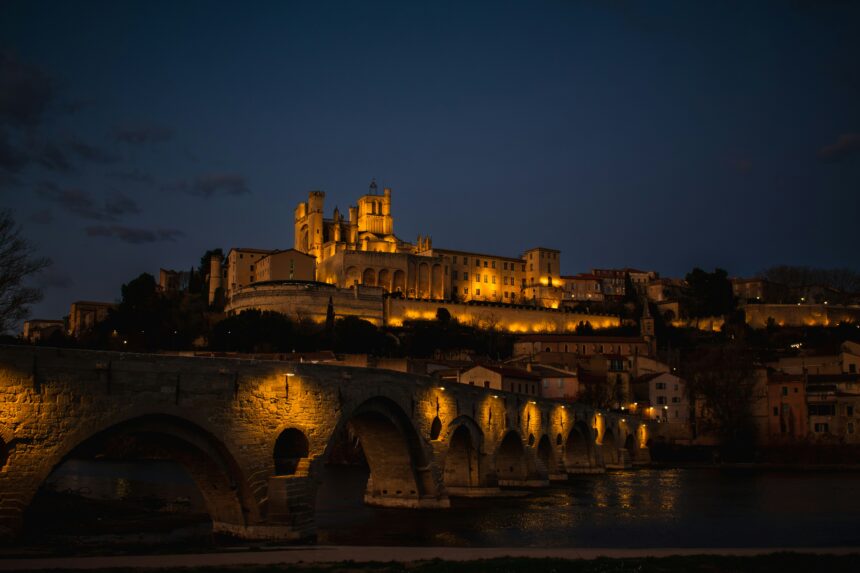
Every evening in Granada, something quietly remarkable happens from a financial perspective. As the last daylight slips behind the Sierra Nevada and the Alhambra’s ancient walls catch the glow of carefully positioned lights, a relatively small group of visitors — a few hundred at most — steps through gates that the majority of the day’s tourists never saw open. That experience, repeated across dozens of evenings each year, is the foundation of one of Europe’s most intelligently managed heritage revenue streams. The revenue from Alhambra night tours annual revenue figures tell a story that goes well beyond ticket sales: they reveal a philosophy of tourism that prioritizes quality over quantity, conservation over cash flow, and long-term sustainability over short-term gain.
Understanding these numbers properly requires looking at the full picture — how attendance is managed, how pricing is structured, who controls the money, how it gets spent, and what the wider economic ripple effects look like for the city of Granada. This article covers all of it.
What Alhambra Night Tours Actually Are
Before getting into the financial data, it’s worth establishing what night tours involve, because the experience itself is directly responsible for the revenue premium they command.
The Alhambra complex in Granada, Spain, is a UNESCO World Heritage Site and one of the most visited historic monuments in Europe. During daytime hours, the site receives the vast majority of its visitors across its various zones — the Nasrid Palaces, the Alcazabar fortress, the Generalife gardens, and the broader palace grounds. Night tours operate as a separate, distinct access category, typically covering either the Nasrid Palaces or the Generalife, depending on the session.
What makes the night experience genuinely different is not simply that it happens after dark. The Patronato de la Alhambra y Generalife — the public body responsible for managing the site under the Junta de Andalucía — uses targeted illumination to reveal architectural details that daylight, paradoxically, can flatten. The carved stucco of the Nasrid halls, the geometric tilework, the muqarnas vaulting above the main chambers: all of these read differently under controlled evening light. Visitor numbers are deliberately restricted, meaning the ambient experience is quieter, slower, and more contemplative than anything a daytime visit offers.
That combination of architectural drama, restricted access, and enforced calm is precisely what allows the Patronato to price night entry at a meaningful premium — and why visitors consistently pay it without hesitation.
Annual Attendance: How Many People Visit the Alhambra at Night?
Attendance management is the cornerstone of the entire night tour revenue model, and understanding it explains why the financial returns are so strong relative to the visitor numbers involved.
The Alhambra receives approximately 2.7 to 2.9 million total visitors annually across all its access categories. Night tours account for roughly 5 to 6 percent of that total, translating to an estimated 120,000 to 150,000 night visitors each year. That proportion is not an accident of demand — it is a deliberate cap, set and enforced by conservation guidelines designed to protect the fragility of the Nasrid Palaces and other historic structures within the complex.
Each evening session typically accommodates between 300 and 400 visitors. Guided groups within those sessions are capped at around 30 people, ensuring that even within the broader evening access window, the experience remains intimate and movement through the site remains controlled. During peak summer months — June through August, when Granada evenings are warm and international tourism is at its highest — sessions regularly sell out weeks or even months in advance. In quieter winter months, capacity still operates at a meaningful level, though the seasonal drop in demand does soften attendance to around 200 to 300 visitors on any given evening.
The practical effect of this structure is that the Alhambra is never trying to maximize headcount during night hours. It is instead managing a deliberately constrained audience whose willingness to pay has been validated by the simple fact that they secured a ticket at all — often through careful planning, early booking, and in some cases, repeat attempts after initial sessions sold out.
Seasonal Attendance Patterns
Seasonality shapes the night tour calendar in meaningful ways. The period from April through October represents the core earning window, with summer months generating the strongest both attendance and revenue. July 2024, for example, saw night tour revenue reach approximately €900,000 for the single month — a figure that reflects near-full capacity utilization across available sessions. January, by contrast, sees considerably softer demand, with revenue estimates for that month sitting around €385,000, supported by a combination of lower attendance and moderate pricing adjustments that help maintain occupancy during the cooler season.
This seasonal pattern is important for understanding the annual revenue total in context. The Alhambra does not attempt to smooth the curve artificially by dramatically discounting winter sessions — instead, modest pricing flexibility keeps the experience accessible to the cultural travelers who visit in shoulder months without undermining the premium positioning that underpins the model’s long-term success.
Ticket Pricing: What Visitors Actually Pay
Pricing is the variable that transforms respectable attendance figures into genuinely significant revenue, and the Alhambra’s approach here is more nuanced than a simple “charge more for night access” formula.
The table below outlines the general pricing structure for night access as it currently stands, noting that the Patronato reviews and occasionally adjusts these figures annually:
| Access Type | Approximate Price Range | Notes |
|---|---|---|
| Standard night entry (self-guided) | €8 – €14 | Covers specific zone only (Nasrid or Generalife) |
| Guided night tour (group) | €15 – €25 | Includes expert historical narration |
| Premium / private experience | €50 – €100+ | Arranged through licensed operators |
| Tour operator group packages | Variable | Pre-allocated blocks at negotiated rates |
One aspect of the pricing structure that often surprises first-time researchers is that the Alhambra does not operate a formal “night surcharge” in the way that some attractions do. Instead, night entry is priced comparably to — or only marginally above — standard daytime access for equivalent zones. The premium perception comes not from an arbitrary evening markup but from the genuine scarcity and experiential quality that night access delivers. Visitors are not paying more because the clock says so; they are paying a fair price for access that is genuinely difficult to obtain and genuinely different from the daytime alternative.
Licensed tour operators receive pre-allocated blocks of tickets under formal agreements with the Patronato. This arrangement guarantees their supply while integrating them into the structured revenue stream rather than allowing them to operate around it. Name-matched ticketing and ID checks at the entrance are standard practice, actively countering the secondary market that tends to emerge around high-demand, capped-attendance cultural experiences.
Revenue from Alhambra Night Tours Annual Revenue: The Core Numbers
This is where the data becomes particularly instructive for anyone studying heritage tourism economics.
Based on the combination of attendance figures, pricing tiers, and session frequency, annual revenue from Alhambra night tours sits in the range of €8 million to €12 million. This encompasses direct ticket sales from standard night entry, guided tour fees, and visitor services associated with evening access. The exact figure in any given year depends on the visitor mix — specifically, the proportion of standard versus premium bookings — and on how many sessions run at or near capacity.
The table below provides a useful way of seeing how per-session economics contribute to the annual total:
| Metric | Estimated Range |
|---|---|
| Visitors per session | 300 – 400 |
| Ticket price per visitor | €14 – €19 |
| Revenue per sold-out session | €4,900 – €7,600 |
| Annual sessions (weekend + selected dates) | 40 – 50 |
| Direct gate revenue from night sessions | €200,000 – €380,000 |
| Total annual night revenue (inc. guided/premium) | €8 million – €12 million |
The gap between the per-session gate calculation and the total annual figure reflects two things. First, guided and premium packages carry significantly higher margins per visitor than standard entry. Second, ancillary revenue — audio guide rentals, visitor services within the complex, and affiliated sales — adds meaningfully to the base ticket income.
Night tours represent approximately 15 to 20 percent of the Alhambra’s total annual ticket revenue, despite accounting for only 5 to 6 percent of total visitors. That disproportionate revenue contribution is the clearest possible illustration of what premium positioning, genuine scarcity, and a well-managed experience can achieve. The Alhambra is generating three to four times its proportional revenue share from night visits — not through aggressive pricing, but through intelligent demand management.
Night Tours Versus Daytime Revenue: A Comparative View
The contrast between day and night revenue models is worth examining directly, because it reveals the structural logic behind the Patronato’s approach.
| Category | Daytime Visits | Night Tours |
|---|---|---|
| Annual visitors | ~2.6 – 2.75 million | ~120,000 – 150,000 |
| Share of total visitors | ~94–95% | ~5–6% |
| Average effective ticket price | €10 – €14 | €14 – €25+ |
| Estimated annual revenue | €25 – €35 million | €8 – €12 million |
| Revenue share of total | ~75–80% | ~15–20% |
| Revenue per visitor ratio | Lower | Significantly higher |
Daytime visits remain the dominant revenue engine in absolute terms, as they should be — volume matters. But night tours punch well above their weight on a per-visitor basis, and that efficiency is precisely what makes them a strategically important part of the Patronato’s financial model rather than simply a novelty offering.
Who Controls the Money: The Patronato de la Alhambra y Generalife
Understanding where night tour revenue goes is essential for understanding why the model works as well as it does, and this is an area where most published coverage falls noticeably short.
The Patronato de la Alhambra y Generalife is a public body operating under the Junta de Andalucía, the regional government of Andalusia. It is responsible for all aspects of the Alhambra’s management: conservation, visitor access, staffing, research, and revenue collection. Crucially, the Patronato operates with a ring-fenced budget — meaning that revenue generated by the site, including night tour ticket sales, is returned directly to the monument’s operational and conservation needs rather than flowing into a general government fund.
This governance structure has a significant practical effect: the Patronato has both the incentive and the financial mechanism to reinvest night tour income into the very heritage assets that make night tours worth experiencing. Conservation work on the Nasrid Palaces, maintenance of the Generalife’s water features, lighting infrastructure, staffing for evening sessions — all of this is funded through the revenue stream that visitors are directly contributing to when they purchase a night tour ticket.
The Patronato publishes annual financial accounts in the form of Memorias de Actividades — activity reports that document revenue, expenditure, and conservation outcomes. These reports are the authoritative primary source for anyone seeking precise, independently verified financial data beyond the estimates that circulate in tourism analysis and press coverage.
One important feature of the advance booking system is the cash flow benefit it generates. Because night tour tickets are purchased weeks or months before the actual visit — especially during peak season — the Patronato benefits from forward revenue that arrives long before the operational costs of running those sessions are incurred. This is a meaningful financial advantage for a public body managing a site with significant ongoing conservation costs.
Economic Impact on Granada Beyond the Alhambra Gates
The revenue from Alhambra night tours annual revenue figures capture only the direct financial story. The wider economic impact on Granada is considerably larger, and it flows from a simple behavioral reality: visitors who attend night tours at the Alhambra are, almost by definition, spending a night in Granada.
The city receives approximately 3.5 million overnight tourists annually, and the Alhambra functions as the primary driver of international visitation. Night tour visitors in particular tend to be culturally engaged, internationally sourced — approximately 73 percent come from outside Spain — and willing to spend on quality accommodation, evening dining, and local experiences. A visitor who books an Alhambra night tour is not passing through Granada on a day trip. They have planned around the experience, which means hotel bookings, restaurant visits, transport expenditure, and secondary attraction spending all flow from that single ticket purchase.
The cumulative economic contribution of night tourism to Granada’s hospitality and service sectors runs into tens of millions of euros annually when these indirect spending patterns are included — a figure that dwells entirely outside the Patronato’s own accounts but which gives the city and regional government every reason to support the night tour program’s continued operation.
Challenges That Affect the Revenue Model
No financial model operates without constraints, and the Alhambra’s night tour revenue stream faces several genuine challenges that limit what might otherwise be even stronger performance.
The most fundamental constraint is the one the Patronato has chosen to embrace rather than resist: the UNESCO conservation guidelines that cap visitor numbers. These restrictions are not negotiable in any meaningful commercial sense. The fragility of the Nasrid Palaces — the humidity sensitivity of the stucco work, the wear on historic flooring, the acoustic and environmental impact of large visitor groups — means that the conservation cap is a hard ceiling on revenue growth through volume. The Patronato has consistently signaled that it will not pursue short-term revenue maximization at the expense of long-term structural preservation, and the UNESCO designation effectively enforces that position.
Weather is a second meaningful risk factor. Granada’s evenings are generally favorable for outdoor and semi-outdoor experiences through most of the year, but rain and unexpectedly cold conditions can lead to tour cancellations, particularly for sessions that include outdoor garden areas. Revenue losses from weather cancellations are estimated to run into the hundreds of thousands of euros annually when demand is high and conditions turn.
Operational costs for evening sessions are also proportionally higher than daytime equivalents. Evening lighting infrastructure, additional security staffing, extended operational hours, and the staffing requirements for guided sessions all represent cost lines that do not apply to standard daytime access. These costs reduce the net margin from night tours, even as gross revenue figures remain strong.
Finally, the secondary ticket market — unauthorized resale at inflated prices — represents both a revenue leakage and a reputational risk. The Patronato’s response, through name-matched ticketing and systematic ID verification at entry, has been effective, but it requires ongoing administration and enforcement investment.
The Future of Night Tour Revenue at the Alhambra
Looking forward, the trajectory for night tour revenue is positive, though the growth will be measured rather than dramatic — and deliberately so.
The most plausible growth levers are revenue-per-visitor improvements rather than attendance expansion. Dynamic pricing, already partially implemented through seasonal price variation, offers scope for more sophisticated optimization — charging more for the highest-demand summer weekend sessions, for instance, while maintaining accessible pricing for shoulder-season midweek visits. Premium experience packages, offered through licensed operators, represent the highest-margin segment of the night tour market and appear to be an area of deliberate development.
Digital marketing and international outreach are also factors. With 73 percent of night tour visitors coming from outside Spain, the Alhambra’s appeal to global cultural tourism audiences is well established. Strengthening visibility in key international source markets — the United States, Germany, France, and the UK in particular — could drive incremental demand without requiring any change to the conservation-driven capacity limits that define the model.
If current trends continue, annual night tour revenue could exceed €12 million by 2027, driven primarily by pricing optimization rather than volume growth. That projection is consistent with a management philosophy that has always prioritized sustainable value creation over short-term maximization — and which has produced a night tourism model that heritage sites across Europe now study and, where possible, emulate.
Conclusion
The revenue from Alhambra night tours annual revenue story is ultimately about what happens when a heritage institution has the discipline to say no to easy money. By capping attendance at 120,000 to 150,000 visitors per year, pricing thoughtfully rather than aggressively, reinvesting income directly into conservation, and managing the broader visitor experience with genuine care, the Patronato de la Alhambra y Generalife has built a night tourism model that generates €8 to €12 million annually while keeping the monument in extraordinary condition.
For tourism economists, the Alhambra model demonstrates that per-visitor revenue efficiency can compensate for volume constraints — sometimes dramatically so. For heritage managers, it shows that conservation-first governance does not have to mean financial underperformance. And for travelers, it confirms that the difficulty of getting a night tour ticket is not a bureaucratic inconvenience but a meaningful part of what makes the experience worth having.
The numbers behind the Alhambra’s evenings are, in their own way, as carefully constructed as the architecture those evenings illuminate.
Frequently Asked Questions
How much annual revenue do Alhambra night tours generate? Alhambra night tours generate an estimated €8 million to €12 million in annual revenue. This figure includes direct ticket sales from standard evening access, guided tour fees, and associated visitor services. Night tours account for approximately 15 to 20 percent of the Alhambra’s total ticket revenue, despite representing only 5 to 6 percent of total annual visitors — a ratio that reflects the effectiveness of premium pricing and controlled access.
How many people attend Alhambra night tours each year? Annual night tour attendance is deliberately capped at between 120,000 and 150,000 visitors. Each evening session accommodates 300 to 400 people, with guided groups limited to around 30 participants. The cap is enforced by the Patronato de la Alhambra y Generalife in accordance with conservation guidelines designed to protect the historic structures of the Nasrid Palaces and Generalife gardens.
How much does an Alhambra night tour ticket cost? Standard night entry for self-guided visits is generally priced between €8 and €14, depending on the zone and season. Guided group night tours with expert historical narration typically range from €15 to €25. Premium and private experiences arranged through licensed tour operators can cost €50 to €100 or more. The Patronato reviews pricing annually, and current figures should always be confirmed through the official Alhambra booking platform.
Who manages Alhambra night tour revenue and how is it spent? The Patronato de la Alhambra y Generalife, a public body under the Junta de Andalucía, manages all revenue from the Alhambra including night tour income. The Patronato operates with a ring-fenced budget, meaning funds generated by the site are returned directly to its conservation, maintenance, and operational needs rather than entering a general government budget. Annual financial accounts are published in the Patronato’s Memorias de Actividades activity reports.
Why are Alhambra night tours priced as a premium experience? The premium is driven by genuine scarcity rather than artificial inflation. Night sessions accommodate only a fraction of the visitors the site receives during daytime hours, tickets regularly sell out weeks or months in advance during peak season, and the experience itself — intimate, atmospheric, and architecturally distinctive — offers something materially different from a standard daytime visit. The combination of restricted supply and strong, consistent demand is what sustains the pricing structure without it feeling exploitative to visitors.
How does the Alhambra’s night tour revenue compare to daytime ticket income? Daytime visits generate the larger absolute revenue figure — estimated at €25 to €35 million annually from approximately 2.6 to 2.75 million visitors. Night tours generate €8 to €12 million from just 120,000 to 150,000 visitors. On a per-visitor basis, night tours are significantly more efficient, generating roughly three to four times their proportional visitor share in revenue. This efficiency is what makes them a strategically important part of the Patronato’s financial model, not simply a supplementary offering.
For more quality, informative content, visit writewhiz