



Monkey Thinking Meme: Meaning, Origin, Uses, and Why It’s So Popular
Introduction
If you’ve spent time scrolling through social media, chances are you’ve seen the monkey thinking meme popping up in comment sections, reaction threads, and viral posts. It’s one of those simple yet oddly expressive memes that captures a very specific kind of human moment—the pause, the overthinking, or that split second when your brain is trying to make sense of something confusing or unexpected. Despite its simplicity, this meme has grown into a widely recognized internet reaction, used across platforms like TikTok, Reddit, and Twitter.
In this guide, we’ll explore what the meme really means, where it came from, why it resonates with so many people, and how you can create or use it effectively. By the end, you’ll understand not just the meme itself, but the psychology behind why it works so well.
What Is the Monkey Thinking Meme?
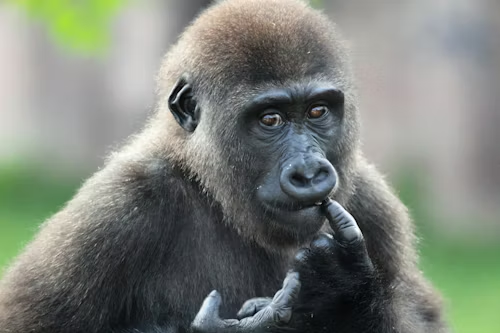
The monkey thinking meme is a reaction image or GIF that typically features a monkey appearing to look upward or slightly to the side with a contemplative or puzzled expression. It is used to represent moments of confusion, internal questioning, or subtle realization. Unlike exaggerated reaction memes, this one relies on a quieter, more relatable emotion—the act of thinking.
What makes this meme particularly interesting is its flexibility. It can be used in humorous situations, sarcastic responses, or even mildly serious contexts. The expression of the monkey is neutral enough to fit multiple interpretations, which is one of the key reasons for its widespread use.
Meaning Behind the Monkey Thinking Meme
At its core, the meme represents a moment of mental processing. It’s often used when someone is trying to figure something out, questioning a situation, or reacting to something that doesn’t quite make sense. In many cases, it reflects that internal dialogue people have when they encounter something confusing or ironic.
There is also a subtle layer of humor tied to the idea of “monkey brain” thinking. The meme plays on the contrast between complex human thoughts and the simple expression of a monkey, creating a humorous disconnect. This contrast makes the reaction feel both relatable and slightly absurd at the same time.
In social media conversations, the meme often appears when someone wants to express doubt without being overly confrontational. Instead of directly challenging a statement, the image suggests quiet skepticism or curiosity. This indirect communication style is part of what makes the meme so effective.
Origin of the Monkey Thinking Meme
The exact origin of the meme is somewhat difficult to trace, as is the case with many internet trends. However, it is widely believed to have originated from a short video clip or GIF featuring a monkey looking upward in a thoughtful manner. This clip was eventually isolated and shared across platforms, where users began adding captions to give it context.
Over time, the image evolved into multiple variations, including still images, GIFs, and edited formats with text overlays. As it spread across different platforms, each community adapted the meme to fit its own style of humor.
Unlike memes that are tied to a specific event or cultural moment, this one grew organically. Its rise was gradual, driven by repeated use and reinterpretation rather than a single viral explosion. This slow growth contributed to its longevity, as it became embedded in everyday online communication.
Why the Monkey Thinking Meme Became So Popular
One of the biggest reasons for the popularity of this meme is its universality. Everyone experiences moments of confusion, overthinking, or quiet realization, and this meme captures that feeling in a simple visual form. It doesn’t rely on language, which makes it easy to understand across different cultures and regions.
Another factor is its subtlety. Many reaction memes are loud or exaggerated, but this one is understated. That subtlety makes it more versatile and easier to use in a wide range of contexts. It works just as well in a humorous post as it does in a sarcastic reply.
The rise of short-form content platforms has also played a role. Reaction memes that can be quickly understood and easily shared tend to perform well in fast-scrolling environments. This meme fits perfectly into that format, making it ideal for modern social media usage.
Different Versions of the Monkey Thinking Meme
As the meme gained popularity, several variations emerged. Each version captures a slightly different nuance of the same core idea.
Thinking Monkey GIF
The animated version is one of the most commonly used formats. It shows the monkey moving slightly, often looking upward or shifting its gaze. This subtle motion adds an extra layer of expression, making it more engaging than a static image.
Monkey Brain Meme
This variation leans more into humor by emphasizing the idea of primitive thinking. It is often used in situations where someone is overanalyzing something simple or reacting in an exaggerated way to a basic problem.
Confused Monkey Meme
This version focuses more on confusion than contemplation. It is typically paired with captions that highlight misunderstandings or ironic situations.
The table below compares these variations and how they are typically used.
| Meme Variation | Main Emotion | Typical Use Case | Format |
|---|---|---|---|
| Thinking Monkey | Curiosity | Subtle questioning | Image or GIF |
| Monkey Brain | Humor | Overthinking simple things | Captioned image |
| Confused Monkey | Confusion | Misunderstanding situations | Image |
How to Use the Monkey Thinking Meme Effectively
Using this meme effectively comes down to timing and context. It works best in situations where a direct response might feel too strong or unnecessary. Instead of writing a long reply, the meme allows you to convey your reaction in a more nuanced way.
For example, it can be used when someone makes a questionable statement, shares an unusual opinion, or presents information that doesn’t quite add up. The meme communicates that you are thinking about what was said without immediately agreeing or disagreeing.
It is also commonly used in humorous contexts, especially when paired with captions that highlight relatable scenarios. In these cases, the meme becomes a way to reflect shared experiences, making it more engaging and relatable.
How to Create Your Own Monkey Thinking Meme
Creating your own version of this meme is relatively simple, even if you have no prior experience with design tools. Most people start by finding a base image or GIF of the monkey and then adding text to provide context.
The process typically involves selecting a scenario that people can relate to and then crafting a caption that enhances the meaning of the image. The key is to keep the text short and impactful, allowing the image to do most of the work.
There are many online tools available that allow you to create memes quickly. These tools often provide templates, text editing features, and easy export options, making the process accessible to anyone.
Monkey Thinking Meme vs Other Reaction Memes
To understand why this meme stands out, it helps to compare it with other popular reaction memes. The table below highlights some key differences.
| Meme Type | Expression Style | Typical Tone | Usage Context |
|---|---|---|---|
| Monkey Thinking | Subtle | Thoughtful | Mild confusion |
| Distracted Reaction | Dramatic | Humor | Obvious distraction |
| Facepalm Reaction | Strong | Frustration | Clear mistakes |
| Confused Reaction | Exaggerated | Comedy | Obvious confusion |
This comparison shows that the monkey-based reaction fills a unique niche. It is less intense than most reaction memes, which makes it more adaptable and widely applicable.
When Should You Use This Meme?
This meme is most effective in situations that involve ambiguity or subtle humor. It works particularly well when you want to express curiosity, skepticism, or mild confusion without escalating the tone of the conversation.
It is also useful in storytelling contexts, where it can highlight a moment of realization or internal thought. Because of its flexibility, it can be used in both casual and semi-serious discussions.
However, like any meme, it should be used thoughtfully. Overusing it or placing it in the wrong context can reduce its impact. The key is to match the tone of the conversation and use the meme as a complement rather than a replacement for meaningful interaction.
Conclusion
The monkey thinking meme has become a staple of online communication because it captures a universal human experience in a simple and visually engaging way. Its ability to convey thought, curiosity, and subtle humor makes it one of the most versatile reaction memes available today.
From its organic origins to its widespread use across social platforms, the meme has proven that simplicity can be incredibly powerful. Whether you’re using it to respond to a confusing statement, highlight a relatable moment, or add humor to a conversation, it offers a unique way to express yourself without saying too much.
As internet culture continues to evolve, memes like this one remind us that the most effective forms of communication are often the simplest. Understanding how and when to use them can enhance your online presence and make your interactions more engaging and memorable.
FAQ Section
What does the monkey thinking meme mean?
It represents moments of thinking, confusion, or subtle questioning, often used as a reaction to something unclear or unexpected.
Where did the monkey thinking meme come from?
It originated from a video or GIF of a monkey appearing to think, which was later adapted into various meme formats.
Can I create my own version of this meme?
Yes, you can easily create your own using meme generators by adding captions to the original image or GIF.
Why is this meme so popular?
Its popularity comes from its relatability, simplicity, and ability to convey subtle emotions without words.
For more quality, informative content, visit writewhiz