


Foenegriek, known in English as fenugreek, is a plant that has been used for centuries in cooking, traditional remedies, and everyday household practices. It belongs to the legume family and is mainly valued for its small, golden-brown seeds and aromatic leaves. While it is widely associated with South Asian, Middle Eastern, and Mediterranean cuisines, its use has spread globally due to its distinct flavor and practical benefits.
What makes foenegriek particularly interesting is how naturally it fits into daily life. It is not treated as a rare or exotic ingredient in many cultures but rather as a familiar staple. People often grow it seasonally, store the seeds for long periods, and use small amounts regularly, which reflects a long-standing relationship between the herb and everyday routines.
Botanical Background and Natural Characteristics
Foenegriek grows as a short, leafy plant with soft green leaves and slender stems. The seeds develop inside small pods and are harvested once they mature and dry. These seeds are hard, angular, and carry a slightly bitter taste when raw, which softens and becomes more complex after cooking or soaking.
From a botanical perspective, the plant is valued for its resilience. It grows well in moderate climates and does not require heavy maintenance. This ease of cultivation has played a major role in its historical spread, as communities could grow foenegriek without advanced farming tools or techniques.
Culinary Uses Across Different Cultures
In the kitchen, foenegriek serves both as a flavoring agent and a functional ingredient. The seeds are often lightly roasted or soaked before use, helping reduce bitterness while enhancing aroma. The leaves, whether fresh or dried, are used as herbs to add depth to various dishes.
Common culinary uses of foenegriek include:
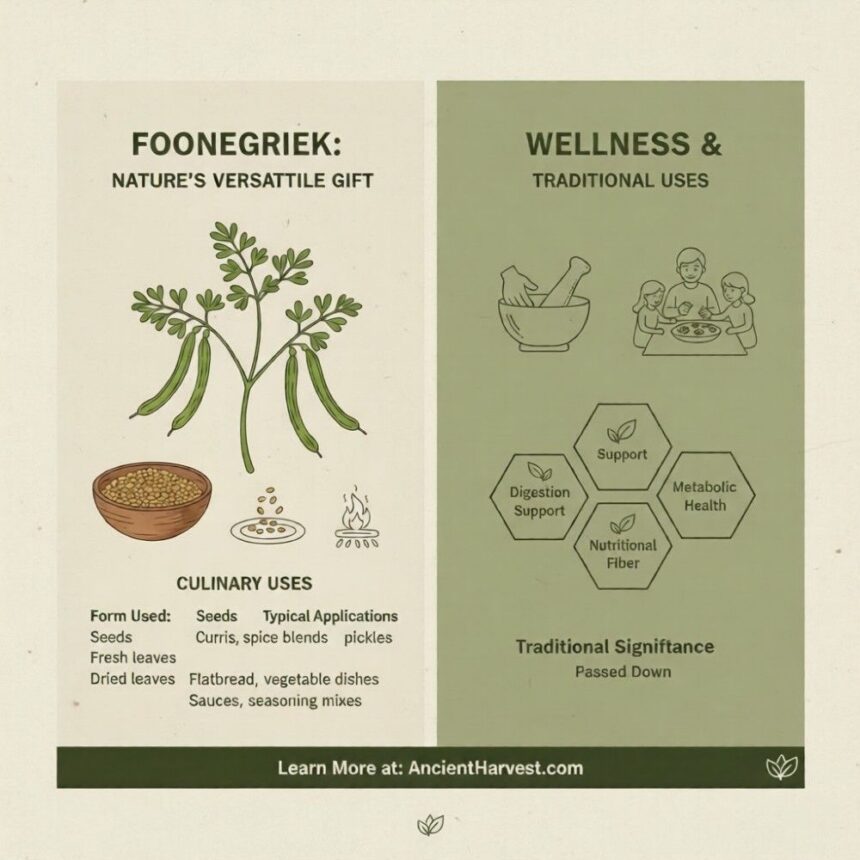
| Form Used | Typical Applications |
| Seeds | Curries, spice blends, pickles |
| Fresh leaves | Flatbreads, vegetable dishes |
| Dried leaves | Sauces, stews, seasoning mixes |
Because it pairs well with other spices, foenegriek is rarely overpowering when used correctly. Its slightly nutty, warm profile adds balance rather than dominance, which is why it remains popular in traditional cooking.
Traditional Uses and Cultural Significance
Foenegriek has held cultural importance far beyond the kitchen. In many regions, it has been part of traditional wellness practices, passed down through generations. Families often relied on shared knowledge about how and when to use the seeds or leaves, making it a common household item rather than a specialized remedy.
Culturally, foenegriek is associated with nourishment and care. It is often included in foods prepared for recovery periods or seasonal changes. This association has helped maintain its relevance over time, even as modern food systems and lifestyles evolved.
Nutritional Profile and General Properties
From a nutritional standpoint, foenegriek seeds contain fiber, plant-based protein, and naturally occurring compounds that contribute to their strong aroma and taste. They are also known for their ability to absorb water and expand, which explains why soaking is a common preparation method.
Rather than being consumed in large quantities, foenegriek is typically used in measured amounts. This controlled use aligns with traditional practices that focus on balance and moderation. Its nutritional contribution comes from consistent, small-scale inclusion rather than concentrated intake.
Health Benefits and Functional Uses of Foenegriek
Foenegriek has been valued not only for its culinary uses but also for its potential health benefits. The seeds contain naturally occurring compounds such as saponins and flavonoids, which have been studied for their role in supporting digestion and metabolic health. In traditional practices, foenegriek was often used to aid in digestive comfort and maintain overall wellbeing.
In addition to digestion, foenegriek has a reputation for supporting general nutrition. Its fiber content contributes to a feeling of fullness, while plant-based proteins add modest nutritional value. While it is not a miracle ingredient, its consistent inclusion in diets historically demonstrates a practical, natural approach to supporting everyday health without relying on synthetic supplements.
How to Prepare and Incorporate Foenegriek
Foenegriek can be used in several ways depending on culinary and functional needs. Soaking the seeds before cooking reduces bitterness and makes them easier to digest, while lightly roasting them enhances aroma and flavor. The leaves, both fresh and dried, can be added to savory dishes, giving meals a subtle herbal note.
For practical daily use, consider these methods:
| Method | Recommended Use | Notes |
| Soaking seeds | Curries, soups, spice blends | Reduces bitterness and softens seeds |
| Roasting seeds | Spice powders, seasoning | Enhances aroma and nutty flavor |
| Fresh leaves | Flatbreads, sautéed vegetables | Adds herbal freshness and mild flavor |
| Dried leaves | Stews, sauces | Provides earthy, consistent flavor year-round |
These preparation techniques ensure that foenegriek is both palatable and versatile, fitting into multiple culinary traditions without overpowering other flavors.
Modern Applications and Global Appeal
Today, foenegriek has crossed traditional boundaries to appear in global kitchens, herbal supplements, and health-focused recipes. Its adaptability makes it attractive to those exploring plant-based diets, international cooking, or natural wellness approaches.
Beyond kitchens, foenegriek is also being included in modern herbal formulations, teas, and seasoning blends marketed for convenience. This transition reflects its lasting relevance and the ability of traditional ingredients to adapt to contemporary lifestyles without losing authenticity.
Considerations and Usage Guidelines
While foenegriek is generally safe for most people, moderation is key. Overuse can result in digestive discomfort due to its high fiber and active compound content. Individuals with specific health conditions or allergies should consult a professional before using it extensively.
Additionally, quality and storage matter. Seeds should be kept in airtight containers away from moisture to maintain flavor and efficacy. Leaves, whether fresh or dried, should also be stored properly to prevent loss of aroma and taste over time.
Conclusion: Why Foenegriek Remains Relevant
Foenegriek continues to be a meaningful herb for both culinary and practical purposes. Its combination of subtle flavor, nutritional contribution, and traditional significance ensures it remains valuable across generations.
By understanding its properties, preparation methods, and practical uses, individuals can incorporate foenegriek thoughtfully into their diets and lifestyles. This balance of tradition and functionality is what allows foenegriek to maintain its place in modern kitchens and wellness practices alike.
For more quality, informative content, visit writewhiz