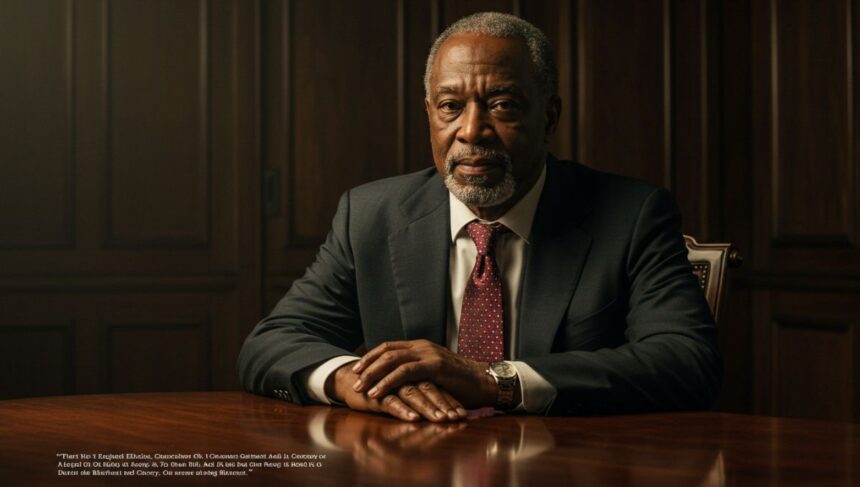
Who Is Claude Edward Elkins Jr?
Claude Edward Elkins Jr serves as Executive Vice President and Chief Commercial Officer at Norfolk Southern Corporation, one of America’s largest freight railroad companies. With over 37 years of experience in the rail industry, Elkins holds responsibility for multiple business divisions including Intermodal, Automotive, Industrial Products, Real Estate, Field Sales, and Customer Logistics. What makes his story compelling isn’t just his current position—it’s how he got there.
Born and raised in Southwest Virginia’s Appalachian region in 1967, Elkins is now 58 years old and leads commercial operations for a company that generated $12.1 billion in revenue during 2024. Unlike many executives who fast-track through MBA programs into corner offices, Elkins spent decades working hands-on railroad jobs before ever seeing a boardroom. His path from brakeman to executive suite offers a masterclass in building credibility through experience rather than credentials alone.
The Foundation: Military Service and Academic Balance
Marine Corps Training That Shaped Leadership
Elkins didn’t head straight into civilian work after high school. He first served in the United States Marine Corps, an experience that fundamentally shaped how he approaches both work and leadership. The Marines teach more than combat skills—they instill a mindset of accountability, mission focus, and leading from the front.
This military background gave Elkins something many corporate leaders lack: an understanding that authority comes from earning respect, not just holding a title. Marines learn that you never ask someone to do something you wouldn’t do yourself. This principle became central to how Elkins would later manage thousands of employees. When he asks field workers to improve safety protocols or boost productivity, they know he’s personally done the work he’s requesting.
Education That Blends Communication and Commerce
Elkins’ academic path reflects curiosity rather than convention. In 1993, he earned a Bachelor of Arts in English from the University of Virginia’s College at Wise. Yes, English—not engineering or business management. This choice might puzzle people who assume railroad executives need technical degrees, but it equipped Elkins with communication skills that many operationally-focused leaders never develop.
Clear writing, persuasive speaking, and the ability to explain complex ideas in simple terms become increasingly valuable as you climb into executive roles. Elkins can negotiate with customers, present strategic visions to boards, and communicate with diverse stakeholders—all skills his English degree helped sharpen. He later balanced this humanities foundation with an MBA in Port and Maritime Economics from Old Dominion University’s Strome College of Business, graduating in 2007. This specialized degree aligned perfectly with Norfolk Southern’s intermodal operations and gave him deep insights into supply chain economics and global trade.
His education continued throughout his career. He pursued executive training through Harvard Business School’s General Management Program, the University of Virginia’s Darden School of Business, and the University of Tennessee Supply Chain Institute. This commitment to continuous learning demonstrates that education doesn’t end with a diploma—it’s a lifelong process.
Starting From the Ground: 1988 to Operations Mastery
Beginning as a Road Brakeman
When Elkins joined Norfolk Southern in 1988, he didn’t enter through a management training program. He started as a road brakeman—one of the toughest, most physically demanding jobs in railroading. Brakemen couple and uncouple rail cars weighing tons, operate track switches in all weather, inspect equipment for safety issues, and ensure trains operate according to protocol.
This work is physically exhausting and potentially dangerous. You’re working with massive machinery, in extreme temperatures, often overnight. A single mistake can cause derailments, injuries, or worse. But this ground-level experience gave Elkins something invaluable: credibility that cannot be manufactured. When he later made executive decisions affecting field workers, they knew he understood their challenges because he’d faced them himself.
Climbing Through Conductor, Engineer, and Yardmaster
Elkins’ competence quickly became apparent. Over the following years, he progressed through various operational roles: conductor, locomotive engineer, and relief yardmaster. Each position added layers to his understanding of how railroads actually function. As a conductor, he coordinated train crews and ensured regulatory compliance. As an engineer, he operated locomotives, mastering the technical aspects of train control systems. As a yardmaster, he managed the complex choreography of rail yard operations where dozens of trains and hundreds of workers intersect.
These weren’t token assignments or brief rotations. Elkins spent meaningful time in each position, building expertise that would later inform strategic decisions. This operational foundation meant that when he eventually led marketing and commercial initiatives, he could design strategies grounded in operational reality rather than theoretical frameworks disconnected from how railroads actually work.
The Transition: From Operations to Commercial Strategy
Moving Into Intermodal Marketing
After establishing himself in operations, Elkins made a significant career shift into Intermodal Marketing. Intermodal freight—the movement of cargo in containers that transfer between ships, trains, and trucks—represents one of the most dynamic and fastest-growing segments of the rail industry. This transition required Elkins to develop new skills in customer relationships, market analysis, and commercial strategy while leveraging his operational knowledge.
His operational background became a competitive advantage in marketing roles. While many marketers focus purely on what customers want, Elkins could bridge customer desires with operational feasibility. He understood load capacities, route constraints, equipment limitations, and scheduling complexities—all factors that impact whether a service commitment can actually be delivered. This dual perspective helped him create solutions that satisfied customers while remaining realistic for railroad operations.
Advancing to VP-Level Commercial Roles
Elkins’ performance in marketing roles opened doors to increasing responsibility. In 2016, he was appointed Group Vice President of Chemicals Marketing, overseeing the transportation of one of rail’s most critical and complex freight categories. Chemical transportation requires specialized equipment, rigorous safety protocols, and deep customer relationships with major manufacturers who cannot tolerate service failures.
By 2018, he advanced to Vice President of Industrial Products, managing the transportation of diverse commodities including metals, construction materials, forest products, and minerals. This role expanded his commercial portfolio and required balancing the needs of multiple industries with different shipping requirements and market dynamics. He was building the comprehensive commercial expertise that would prepare him for the top commercial position.
Reaching the Executive Suite as Chief Commercial Officer
December 2021: Taking the Helm of Commercial Operations
In December 2021, Claude Edward Elkins Jr reached the pinnacle of his career when Norfolk Southern promoted him to Executive Vice President and Chief Commercial Officer. The role was previously titled Chief Marketing Officer, but the updated designation reflects the expansive scope of his responsibilities.
As Chief Commercial Officer, Elkins oversees Norfolk Southern’s entire commercial portfolio—a multi-billion-dollar operation serving thousands of customers across diverse industries. His leadership directly impacts the company’s financial performance, competitive positioning, and strategic direction. This role came during a challenging period for railroads: the COVID-19 pandemic had disrupted supply chains globally, customer expectations were evolving rapidly with demands for digital transparency and faster transit, labor shortages created operational constraints, and regulatory pressures intensified.
Leading Through Industry Transformation
Elkins brought both operational wisdom and strategic vision to these challenges. His understanding of railroad operations helped Norfolk Southern maintain service reliability during supply chain chaos. His customer-focused approach helped the company adapt its offerings to changing market needs. His commitment to innovation pushed the organization to leverage technology for competitive advantage.
Under his commercial leadership, Norfolk Southern has emphasized several strategic priorities: expanding intermodal services to capture freight shifting from highways to rail, modernizing customer-facing digital systems to improve experience and transparency, strengthening relationships with automotive manufacturers as the industry transitions to electric vehicles, and enhancing sustainability credentials to meet growing environmental expectations from customers and regulators.
Leadership Philosophy: Empathy Meets Strategic Thinking
Leading With Understanding and Accountability
What distinguishes Elkins’ leadership style is his combination of humility and strategic thinking. Having worked frontline railroad jobs, he leads with empathy for employees at all organizational levels. He understands the physical demands, safety risks, and operational pressures that field workers face daily. This creates authenticity in his leadership—he’s not making decisions from an ivory tower but from a foundation of real experience.
This doesn’t mean he’s soft on performance. Military discipline and decades of railroad experience have made him results-oriented and demanding. But his expectations come with understanding and support rather than detached criticism. Employees respond differently when they know their leader has walked in their shoes and understands what he’s asking of them.
Bridging Operations and Strategy
One of Elkins’ core strengths is his ability to bridge operational reality with strategic vision. Many executives excel at one or the other—they’re either operationally focused but lack strategic perspective, or they’re strategic thinkers disconnected from operational constraints. Elkins’ career path gave him both perspectives. He can envision ambitious strategic goals while simultaneously understanding the operational steps required to achieve them.
This dual capability makes him particularly effective in commercial leadership. He can negotiate with customers about service capabilities while understanding exactly what Norfolk Southern can operationally deliver. He can commit to sustainability initiatives while knowing which operational changes will drive real environmental impact versus which are performative. He can champion digital transformation while understanding how technology actually gets implemented on railroad property.
Industry and Community Leadership Beyond Norfolk Southern
Chair of Georgia Chamber of Commerce
Elkins’ influence extends well beyond Norfolk Southern’s boundaries. In 2025, he became Chair of the Georgia Chamber of Commerce—notably, the first railroad executive to hold this position in the organization’s 110-year history. This leadership role reflects his standing in Georgia’s business community following Norfolk Southern’s headquarters consolidation to Atlanta.
The Georgia Chamber represents businesses across all industries, and Elkins’ chairmanship gives him a platform to advocate for transportation infrastructure investment and economic policies that support logistics industries. His perspective as both a railroad executive and chamber leader helps bridge different sectors of the economy.
Board Positions and Industry Engagement
Elkins serves on the board of directors for the National Association of Manufacturers, one of America’s most influential business advocacy organizations. This position allows him to contribute railroad industry perspectives to manufacturing policy discussions and helps maintain strong relationships between Norfolk Southern and its manufacturing customers.
He also holds board positions with TTX Company (a leading rail equipment provider), the East Lake Foundation (focusing on education and economic opportunity in underserved communities), and the Georgia State University Marketing RoundTable. He participates in The Conference Board’s Council for Chief Marketing Officers, engaging with senior marketing executives across industries to share best practices and address common challenges.
Community Commitment and Personal Values
Despite demanding executive responsibilities, Elkins prioritizes community engagement and workforce development. His involvement with the East Lake Foundation reflects a belief that businesses should contribute to community wellbeing, not just extract profit. The foundation’s focus on education and economic opportunities in underserved neighborhoods aligns with his own background—he understands how education and opportunity can transform lives.
Colleagues describe Elkins as someone who emphasizes integrity, service, and honor in both professional and personal contexts. His Marine Corps values remain evident in how he conducts business and treats people. He encourages his teams to maintain work-life balance even while demanding high performance, recognizing that sustainable excellence requires taking care of people rather than burning them out.
Understanding Norfolk Southern: Context for Elkins’ Leadership
America’s Eastern Railroad Giant
To appreciate Elkins’ impact, it helps to understand Norfolk Southern itself. Formed in 1982 through the merger of Norfolk & Western Railway and Southern Railway, Norfolk Southern operates across 22 Eastern states, the District of Columbia, and Ontario, Canada. The company employs roughly 19,000 people and generated $12.1 billion in revenue during 2024.
Norfolk Southern’s freight network moves coal, intermodal containers, automotive vehicles, agricultural products, chemicals, metals, construction materials, and various other commodities. The company delivers approximately 7 million carloads annually. Norfolk Southern’s operations are essential infrastructure for American manufacturing, agriculture, and commerce—when Norfolk Southern trains stop moving, significant portions of the U.S. economy feel the impact.
The railroad industry faces unique challenges compared to other transportation modes. Rail infrastructure requires massive capital investment with decades-long payback periods. Operations must balance efficiency with safety in an industry where accidents can be catastrophic. Service must remain reliable despite weather extremes, equipment failures, and infrastructure constraints. Labor relations are critical in a highly unionized workforce. Environmental regulations continue tightening around emissions, noise, and land use.
Strategic Imperatives Under Elkins’ Commercial Leadership
As Chief Commercial Officer, Elkins must navigate all these factors while driving revenue growth and maintaining customer satisfaction. Several strategic imperatives define his commercial agenda:
Intermodal Growth: Shifting freight from highways to rail offers environmental benefits and can relieve highway congestion, but requires competitive pricing, reliable service, and infrastructure investment. Elkins has championed intermodal expansion as both a commercial opportunity and sustainability initiative. During 2024’s third quarter, Norfolk Southern’s intermodal volume grew 9% year-over-year, demonstrating traction in this strategy.
Automotive Evolution: The automotive industry’s transition to electric vehicles creates both opportunities and challenges for rail transportation. EVs require different supply chain configurations, and Elkins must ensure Norfolk Southern adapts its automotive services to this transformation. Norfolk Southern originates more automotive traffic than any other Class I railroad, making this segment critical to the company’s success.
Digital Transformation: Modern customers expect digital transparency—they want real-time shipment visibility, online booking, and data-driven insights. Elkins has pushed Norfolk Southern to modernize its customer-facing systems and leverage data analytics for operational improvements. This digital transformation helps Norfolk Southern compete effectively in an increasingly technology-driven logistics environment.
Sustainability Leadership: Corporate and regulatory pressure for reduced carbon emissions continues intensifying. While railroads are already more fuel-efficient than trucks, Elkins recognizes that sustainability leadership requires continuous improvement. Norfolk Southern helps customers avoid approximately 15 million tons of yearly carbon emissions by shipping via rail rather than road.
Service Reliability: In an industry where service failures can disrupt customers’ entire operations, reliability remains paramount. Elkins’ operational background helps him focus on the operational investments and practices that genuinely improve service consistency rather than superficial metrics that look good in presentations but don’t translate to customer experience.
Comparing Elkins’ Path to Traditional Executive Trajectories
| Career Aspect | Claude Edward Elkins Jr | Typical Corporate Executive |
|---|---|---|
| Starting Position | Road Brakeman (frontline operations, 1988) | Management training program or analyst role |
| Years to Executive Role | 33 years (1988-2021) | 10-15 years typical |
| Educational Background | BA English + MBA Port & Maritime Economics | MBA from top business school |
| Operational Experience | Extensive (Brakeman, Conductor, Engineer, Yardmaster) | Limited or theoretical only |
| Leadership Foundation | U.S. Marine Corps + hands-on railroad work | Business school case studies + rotational programs |
| Credibility Source | Earned through decades of frontline experience | Conferred through educational credentials and early promotions |
| Decision-Making Style | Grounded in operational reality | Often strategy-focused, may disconnect from operations |
| Employee Perception | “He understands what we do” | Often seen as distant from frontline work |
| Strategic Perspective | Built gradually through increasing responsibility | Developed through executive education and consulting models |
| Risk of Disconnect | Low—direct experience at all levels | Higher—limited exposure to operational realities |
This comparison isn’t meant to suggest one path is superior to another, but rather to highlight what makes Elkins’ trajectory distinctive. His path required patience—33 years from brakeman to executive officer—but built a foundation of credibility and operational knowledge that cannot be replicated through business school alone.
Who Should Read About Claude Edward Elkins Jr?
Professionals Who Will Benefit From This Story
Aspiring Business Leaders: Anyone seeking to advance in their career will find lessons in Elkins’ path—the value of operational experience, the importance of continuous learning, the role of military discipline in civilian success, and the power of leading with authenticity rather than pretense.
Railroad Industry Professionals: Those working in freight rail, whether in operations, sales, management, or executive roles, can learn from how Elkins successfully transitioned between different functions and brought diverse experiences together into effective leadership. His career demonstrates how operational expertise enhances commercial strategy.
Supply Chain and Logistics Professionals: Anyone involved in transportation, logistics, or supply chain management will gain insights into how railroad operations actually work and how commercial strategies must align with operational capabilities. Understanding this relationship is critical for anyone working in multi-modal transportation.
Military Veterans Transitioning to Civilian Careers: Veterans considering corporate careers will see how military values and leadership training translate effectively into business contexts, particularly in operations-intensive industries. Elkins’ story demonstrates that military service provides real advantages in corporate environments that value discipline, accountability, and mission focus.
Business Students and MBA Candidates: Elkins’ career path offers a case study in strategic career building—how diverse experiences create unique value, why operational knowledge enhances strategic thinking, and how leadership credibility is earned rather than conferred by title alone. This contrasts with traditional MBA career paths and offers an alternative model.
Corporate Board Members and Investors: Those evaluating transportation sector investments or serving on corporate boards will gain deeper understanding of what effective railroad leadership looks like and the strategic challenges facing the industry. Elkins represents a breed of executive with both operational depth and strategic vision.
Economic Development Professionals: Elkins’ community involvement and industry leadership offer perspectives on how transportation infrastructure connects to regional economic development and community wellbeing. His dual role as Norfolk Southern executive and Georgia Chamber Chair demonstrates how business and community interests intersect.
Young Professionals Starting “At the Bottom”: Anyone beginning their career in entry-level positions will find inspiration in Elkins’ story. His path demonstrates that starting at the bottom isn’t a disadvantage—it’s an opportunity to build the kind of comprehensive understanding and credibility that accelerates long-term success.
Elkins’ Commercial Strategy in Action: Recent Results
2024 Performance Under His Leadership
Under Elkins’ commercial leadership, Norfolk Southern has delivered solid results even amid challenging market conditions. During 2024, the company generated $12.1 billion in revenue while delivering approximately 7 million carloads. The company’s full-year adjusted operating ratio improved to 65.8%, representing 160 basis points of improvement from 2023.
During the third quarter of 2024, Norfolk Southern’s overall volume increased 7% year-over-year. Merchandise traffic gained 2% with revenue up 3%, while intermodal volume surged 9% with revenue up 4%. These growth numbers reflect successful execution of Elkins’ commercial strategies, particularly in intermodal where the company has focused significant effort.
However, Elkins has also had to navigate headwinds. As he noted during earnings calls, stagnant truck prices continue to pressure domestic intermodal rates, and the longshoremen’s strike at East and Gulf Coast ports in October 2024 temporarily impacted international volumes. His ability to communicate these challenges transparently while maintaining strategic focus demonstrates mature commercial leadership.
Balancing Growth and Profitability
One of Elkins’ key challenges is balancing volume growth with profitability. Growing volume means filling trains and utilizing assets efficiently, but not all volume is equally profitable. Intermodal freight, particularly international containers, tends to generate lower per-unit revenue than merchandise freight like chemicals or automotive. Elkins must make strategic choices about which business to pursue and which to decline.
His operational background helps here. He understands not just the revenue side but also the cost side—what it actually costs to move different types of freight. This knowledge helps him make informed decisions about pricing and customer selection rather than chasing volume for its own sake.
Key Leadership Lessons From Elkins’ Career
Patience Builds Unshakeable Foundations
Elkins spent 33 years progressing from brakeman to executive officer. In an era where many professionals expect rapid advancement, his trajectory teaches a different lesson: patient progression builds foundations that cannot be shaken. When you’ve worked every level of an organization, you understand how decisions at the top ripple down to affect people doing the actual work.
This patience also created credibility that money can’t buy. When Elkins walks into a meeting with field employees, union representatives, or operational managers, his authority doesn’t come from his title—it comes from shared experience. They know he’s been where they are. That credibility gives him latitude to push for changes that might face resistance if proposed by someone without his background.
Diverse Skills Beat Narrow Specialization
Elkins’ unusual combination of skills—English degree, military service, operational railroad experience, MBA in maritime economics, and executive training—created a unique leadership profile. In today’s business environment, many professionals are encouraged to specialize deeply in one area. Elkins took a different approach: he built breadth across multiple disciplines.
This breadth makes him effective across different situations. He can write persuasively, think strategically about supply chain economics, understand operational constraints, lead with military-style discipline, and communicate effectively with diverse stakeholders. Few executives possess this range, and it’s become a significant competitive advantage.
Empathy and Accountability Can Coexist
One of the most important lessons from Elkins’ leadership is that empathy and accountability aren’t mutually exclusive—in fact, they reinforce each other. His operational experience created empathy for employees at all levels, but that empathy doesn’t mean lowering standards. Instead, it means understanding what reasonable expectations look like and providing the support people need to meet them.
This balanced approach creates high-performance cultures. Employees work hard not just because they’re afraid of consequences but because they respect the leader asking them to perform. When expectations come with understanding and support, people respond with greater effort and commitment than when expectations come with threats and pressure alone.
Challenges Facing Railroad Leadership Today
East Palestine Derailment and Safety Scrutiny
On February 3, 2023, a Norfolk Southern freight train derailed in East Palestine, Ohio, releasing hazardous materials and creating a significant environmental and public relations crisis. While Elkins wasn’t directly responsible for operations (that falls under the Chief Operating Officer), the incident affected every aspect of Norfolk Southern’s business, including commercial operations.
The derailment intensified regulatory scrutiny of the entire rail industry. It highlighted safety issues, raised questions about maintenance practices, and put railroads under a microscope. For Elkins, this meant reassuring customers that Norfolk Southern could be trusted with their freight while the company worked through the incident’s aftermath. The company ultimately reached a $600 million class action settlement related to the derailment.
This crisis demonstrates the interconnected nature of railroad operations. Even though Elkins leads commercial operations rather than safety or operations, a safety incident affects customer confidence and commercial relationships. His operational background helped him communicate credibly with customers about the steps Norfolk Southern was taking to prevent future incidents.
Labor Relations in a Tight Market
The railroad industry is highly unionized, and labor relations significantly impact operations and service reliability. In recent years, labor negotiations have become more contentious as workers push for better quality of life issues like predictable schedules and sufficient time off. A national railroad labor dispute in 2022 nearly resulted in a strike that would have paralyzed the American economy.
For Elkins, labor relations affect commercial operations directly. If service becomes unreliable due to labor shortages or disputes, customers lose confidence and take their freight elsewhere. His operational background and understanding of what railroad work entails helps him advocate internally for labor policies that support both employee wellbeing and operational reliability.
Digital Transformation in a Traditional Industry
Railroads have historically been slow to adopt new technologies. The industry’s long asset lifecycles, complex regulatory environment, and conservative culture create resistance to change. However, modern customers increasingly expect the kind of real-time visibility and digital interaction they get from companies like Amazon.
Elkins has pushed for digital transformation in customer-facing systems, but implementing these changes in a 197-year-old company with entrenched processes is challenging. It requires balancing the need for innovation with respect for proven practices that keep trains moving safely. His ability to bridge old-school operational knowledge with modern commercial expectations positions him well for this challenge.
Environmental Regulations and Sustainability Demands
Climate change concerns are driving both regulatory pressure and customer demands for sustainable transportation. While railroads are already more fuel-efficient than trucks, the bar continues rising. Customers increasingly factor sustainability into their transportation decisions, and regulators are tightening emissions standards.
Elkins must balance environmental goals with commercial viability. Investments in cleaner technology and more efficient operations cost money, and those costs ultimately affect pricing. His challenge is positioning sustainability as a competitive advantage—helping customers meet their own environmental goals by choosing rail—while maintaining price competitiveness against trucks.
The Railroad Industry’s Competitive Landscape
Competition Among Class I Railroads
Norfolk Southern competes primarily with other Class I railroads (the seven largest freight railroads in North America). In the Eastern U.S., its main competitor is CSX Corporation. These companies compete for customers and freight volume, but they also cooperate on shared infrastructure and interline traffic (freight that moves across multiple railroad networks).
Elkins must balance competitive intensity with industry collaboration. When Norfolk Southern delivers superior service or offers more attractive pricing, it can win business from CSX. But the companies also need to work together when freight moves between their networks. This dynamic requires sophisticated commercial strategy—knowing when to compete aggressively and when to cooperate for mutual benefit.
Truck Competition and Modal Shift
Trucks are railroads’ primary competition for most freight. Trucks offer door-to-door service, flexible scheduling, and faster transit for many routes. Railroads offer better economics for long-haul freight and lower environmental impact, but they require customers to use terminals and accept less flexible schedules.
Elkins’ intermodal strategy aims to capture freight from trucks by making rail competitive on service while maintaining cost advantages. However, as he noted in earnings calls, when truck capacity is abundant and truck pricing is weak (as it has been recently), it pressures railroad pricing and makes modal shift more difficult. His challenge is maintaining rail’s value proposition even when truck economics temporarily improve.
Frequently Asked Questions About Claude Edward Elkins Jr
What is Claude Edward Elkins Jr’s current role?
Claude Edward Elkins Jr serves as Executive Vice President and Chief Commercial Officer at Norfolk Southern Corporation. In this position, he oversees the company’s Intermodal, Automotive, Industrial Products, Real Estate, Industrial Development, Short Line Marketing, Field Sales, and Customer Logistics business divisions. He reports directly to the CEO and is responsible for the company’s commercial strategy and revenue generation across all business segments.
How did Claude Edward Elkins Jr start his career at Norfolk Southern?
Elkins began his Norfolk Southern career in 1988 as a Road Brakeman, one of the most physically demanding entry-level positions in railroading. He worked hands-on with trains, coupling and uncoupling rail cars, operating switches, and ensuring safe operations in all weather conditions. This frontline experience gave him deep understanding of railroad operations that would later inform his executive decision-making.
What educational background does Claude Edward Elkins Jr have?
Elkins holds a Bachelor of Arts in English from the University of Virginia’s College at Wise, earned in 1993, and an MBA in Port and Maritime Economics from Old Dominion University’s Strome College of Business, earned in 2007. He has also completed executive education programs at Harvard Business School’s General Management Program, the University of Virginia’s Darden School of Business, and the University of Tennessee Supply Chain Institute. This combination of humanities education, specialized business knowledge, and ongoing executive training created a well-rounded leadership foundation.
Did Claude Edward Elkins Jr serve in the military?
Yes, Elkins served in the United States Marine Corps before joining Norfolk Southern. His military service instilled values of discipline, leadership, and accountability that have defined his approach to business leadership. The Marines’ emphasis on leading by example and never asking subordinates to do what you wouldn’t do yourself became central to his management philosophy.
What makes Claude Edward Elkins Jr’s career path unusual?
Elkins’ career path is unusual because he spent 33 years progressing from entry-level frontline work to executive leadership within the same company. Most modern executives fast-track through management training programs or move between companies to accelerate advancement. Elkins took the slower path of mastering each level before advancing, which built comprehensive operational knowledge and credibility that cannot be gained through conventional executive development programs.
What major challenges has Norfolk Southern faced during Elkins’ tenure as Chief Commercial Officer?
Major challenges during Elkins’ time as Chief Commercial Officer include the February 2023 East Palestine, Ohio derailment which created safety scrutiny and reputational challenges; supply chain disruptions from the COVID-19 pandemic; tight labor markets and workforce challenges; increasing customer expectations for digital capabilities and real-time visibility; pressure from truck competition during periods of weak truck pricing; and growing regulatory and customer demands for environmental sustainability.
What board positions and community roles does Claude Edward Elkins Jr hold?
Elkins serves as Chair of the Georgia Chamber of Commerce (the first railroad executive to hold this position in the chamber’s 110-year history). He sits on the board of directors for the National Association of Manufacturers, TTX Company, the East Lake Foundation, and the Georgia State University Marketing RoundTable. He also participates in The Conference Board’s Council for Chief Marketing Officers. These roles demonstrate his commitment to industry leadership and community engagement beyond his Norfolk Southern responsibilities.
Elkins’ Legacy and Lasting Impact
Proving the Value of Ground-Up Leadership
One of Elkins’ most significant contributions to business leadership is demonstrating that starting at the bottom and working up isn’t a disadvantage—it’s a powerful advantage. In an era that often prizes rapid advancement and frequent job changes, his career proves that patient progression through an organization builds unique capabilities.
His success challenges the notion that the fastest path to leadership is through elite MBA programs and management consulting. While those paths have merit, Elkins shows an alternative: deep operational experience combined with strategic education creates leaders with both tactical knowledge and strategic vision.
Bridging Generations in Railroad Industry
The railroad industry faces a significant generational transition. Many experienced workers and leaders are retiring, taking decades of institutional knowledge with them. Younger workers bring different expectations about work-life balance, technology, and career progression. Elkins bridges these generations effectively.
His Marine Corps background and decades of railroad experience connect him with older, traditional workers who value discipline and experience. His embrace of technology, focus on customer experience, and emphasis on continuous improvement resonate with younger employees who want innovation and change. This ability to bridge generational divides helps Norfolk Southern manage its workforce transition effectively.
Mentoring Future Leaders
While Elkins’ formal responsibilities focus on commercial operations, his informal influence extends to mentoring and developing future leaders. Employees who watch his career trajectory see a model for how to build credibility, advance through merit, and lead with both strength and empathy. His example teaches that leadership isn’t about charisma or political maneuvering—it’s about competence, integrity, and genuine care for the people you lead.
Many railroad professionals credit Elkins with demonstrating that operational experience isn’t a career limitation—it’s a foundation for executive success. His path encourages operational employees to pursue advancement while valuing the frontline experience they’ve gained.
Looking Forward: The Future Under Elkins’ Commercial Leadership
Continuing Intermodal Expansion
Elkins has made intermodal growth a strategic priority, and this focus will likely continue. Intermodal freight offers significant growth potential as companies seek to reduce carbon emissions and as highway congestion makes trucking less attractive. Norfolk Southern’s extensive East Coast intermodal network positions it well to capture this growth, but success requires continued investment in terminals, equipment, and service reliability.
The challenge will be growing intermodal volume while maintaining profitability. International intermodal, which has been a significant growth driver, typically generates lower margins than domestic business. Elkins must balance volume growth with margin management to ensure intermodal expansion contributes to overall financial performance.
Adapting to Automotive Industry Transformation
The automotive industry’s shift to electric vehicles presents both opportunities and challenges. EV supply chains differ from traditional automotive supply chains—batteries require different handling, manufacturing locations are shifting, and part counts differ. Norfolk Southern originates more automotive traffic than any other Class I railroad, making automotive a critical business segment.
Elkins must ensure Norfolk Southern adapts its automotive services to serve EV manufacturers effectively while maintaining relationships with traditional automakers. This requires understanding how automotive supply chains are evolving and positioning Norfolk Southern’s services accordingly. His customer-focused approach and willingness to adapt services to customer needs position the company well for this transition.
Digital Customer Experience as Competitive Advantage
As customer expectations for digital capabilities continue rising, Norfolk Southern’s investment in digital tools will become increasingly important for competitive differentiation. Companies that grew up in the digital age expect real-time visibility, online booking, automated billing, and data-driven insights. Traditional railroads, including Norfolk Southern, are catching up to these expectations.
Elkins has pushed for digital transformation in customer-facing systems, but there’s more work ahead. The company that makes rail shipping as easy as booking freight on a digital platform will gain significant competitive advantage. This transformation requires not just technology investment but also cultural change throughout the organization.
Final Thoughts: What We Learn From Claude Edward Elkins Jr
Leadership Is Built, Not Conferred
Perhaps the most important lesson from Elkins’ career is that effective leadership is built through experience, not conferred through credentials. His 33-year progression from brakeman to executive officer created leadership capabilities that cannot be replicated in business school or gained through management consulting.
This doesn’t diminish the value of education or alternative career paths—it simply demonstrates that there are multiple paths to effective leadership, and the path through operational experience creates distinct advantages. Leaders with frontline experience lead differently than those who’ve never done the work they’re asking others to do.
Success Requires Patience and Persistence
In an era of instant gratification and rapid career advancement, Elkins’ story teaches the value of patience. His willingness to spend years mastering each level before advancing created foundations that support his current success. This patience wasn’t passive—it was active mastery of each position before moving to the next.
Young professionals often feel pressure to advance quickly, fearing that slow progression indicates failure. Elkins’ career suggests the opposite: patient progression that builds genuine expertise often leads to greater long-term success than rapid advancement built on credentials alone.
Values Matter More Than Tactics
Throughout his career, Elkins has emphasized values like integrity, service, and honor—principles instilled during his Marine Corps service. These values have guided his decisions and shaped his leadership style. In an environment where business tactics and strategies constantly evolve, foundational values provide stability and direction.
His commitment to these values has built trust with employees, customers, and industry partners. People know that Elkins will do what he says, treat them fairly, and make decisions guided by principle rather than opportunism. This reputation is worth more than any tactical advantage.
Community and Industry Matter Beyond Company Success
Elkins’ extensive involvement in industry organizations and community development demonstrates a belief that success means more than corporate performance. His chairmanship of the Georgia Chamber of Commerce, board positions with multiple organizations, and community engagement reflect an understanding that business leaders have responsibilities beyond maximizing shareholder returns.
This broader perspective makes him more effective in his corporate role. Understanding how Norfolk Southern fits into regional economies, how transportation policy affects communities, and how workforce development impacts industry success helps him make better strategic decisions. His community involvement isn’t separate from his business leadership—it enhances it.
Conclusion
Claude Edward Elkins Jr’s story offers a compelling alternative to conventional executive career paths. His 37-year progression from road brakeman to Executive Vice President and Chief Commercial Officer at Norfolk Southern demonstrates that patient progression through operational roles creates leadership capabilities that fast-track programs cannot replicate.
His success rests on several foundations: military discipline from his Marine Corps service, comprehensive operational knowledge from years of frontline railroad work, strategic thinking developed through targeted education and executive training, and values-based leadership that earns genuine respect rather than demanding it through authority alone.
As Chief Commercial Officer, Elkins leads Norfolk Southern’s commercial operations during a transformative period for the railroad industry. He balances growth imperatives with profitability requirements, navigates competitive pressures from both rival railroads and trucking, drives digital transformation in a traditional industry, and positions the company to serve evolving customer needs in automotive, intermodal, and other key markets.
Beyond his corporate responsibilities, Elkins contributes to industry leadership through board positions and community development through organizations like the East Lake Foundation. His chairmanship of the Georgia Chamber of Commerce—the first railroad executive to hold this position—reflects his standing as a business leader whose influence extends beyond his company.
For professionals at any career stage, Elkins’ path offers valuable lessons: operational experience builds credibility that credentials alone cannot provide, patient progression creates foundations for lasting success, diverse skills beat narrow specialization in complex leadership roles, and values matter more than tactics in building reputation and trust.
His legacy will ultimately be measured not just by Norfolk Southern’s financial performance under his commercial leadership, but by his demonstration that there are multiple paths to executive success—and that the path through operational experience creates leaders with unique capabilities that modern business desperately needs.
As railroads face challenges from technological change, environmental pressures, workforce transitions, and evolving customer expectations, leaders like Claude Edward Elkins Jr—who combine deep operational knowledge with strategic vision and values-based leadership—will be essential for navigating these transformations successfully.