



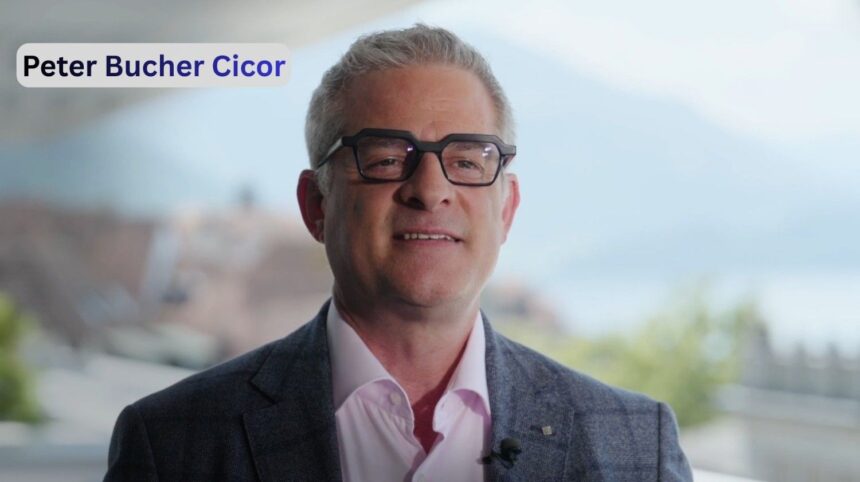
Who is Peter Bucher (at Cicor Group)?
Peter Bucher serves as a senior operations leader at Cicor (specifically at the Bronschhofen site in Switzerland). His role centers on managing incoming-goods handling, traceability, and process improvements in electronics manufacturing services (EMS)—a demanding environment where precision, reliability, and efficiency matter.
Under his guidance, Cicor has implemented significant changes to adapt to challenges such as increased supply-chain complexity, surging parcel volumes, and rising demands for documentation and traceability from clients in sectors like medical technology, aerospace, and defense.
Bucher combines technical know-how with strategic leadership. His background enables him to bridge the gap between engineering detail and operational execution — a profile especially valuable in industries requiring high precision and consistent quality.
What is Cicor Group — Context for Bucher’s Work
Cicor Group is a Swiss-headquartered electronics manufacturing and services company. It offers full-cycle electronic solutions: printed circuit boards (PCBs), assemblies, hybrid circuitry, precision plastics, and more. Its customers range across medical technology, industrial electronics, aerospace, and defence.
Originally founded in 1966 under the name Cicorel S.A., Cicor began with manufacturing PCBs — for example, for quartz watches. Over the decades, the company expanded through organic growth and acquisitions, entering the EMS (electronic manufacturing services) business in 2005 and broadening its offerings to include high-precision manufacturing and electronics solutions.
As of recent reports, Cicor employs several thousand people across many countries, offering global manufacturing capacity and flexibility. For Bucher, that global reach and broad capabilities create a complex but opportunity-rich environment.
Understanding Cicor’s scale, diversity, and the demands of its industries helps appreciate the importance and challenges of Bucher’s work in maintaining quality, traceability, and efficiency across a global supply chain.
Core Challenges in EMS that Bucher Tackles
The world of electronics manufacturing services is often high-pressure. Clients in medical, aerospace or defense expect zero-defect reliability, strict traceability, and timely delivery. On top of that, supply chains have become complex — with many suppliers, mixed product lines, and frequent regulatory or compliance demands.
At Cicor’s Bronschhofen site, Bucher confronted a surge in incoming packages and materials — sometimes rising to several times previous volumes. Managing this manually risked errors, delays, and production stoppages.
Traditional manual processes for goods receipt and materials logging simply couldn’t scale without increasing error rates. For Cicor, letting errors slip through would jeopardize quality, traceability, and customer trust — particularly in high-reliability sectors. Bucher recognized that the existing model wasn’t sustainable in the long run.
Bucher’s Strategy — Automation, Traceability, and Process Discipline
Rather than patching the old system, Bucher drove a strategic shift: automation of incoming-goods processing paired with robust traceability systems.
One concrete outcome was the development and implementation of an intelligent system (named “iWE”) — done in collaboration with a partner company — that handles the arrival of packages, automatically matches them to orders, prioritizes urgent items, logs labels and paperwork digitally, and archives data systematically.
This process dramatically improved speed and accuracy, reduced manual labor and human-error risk, and created a reliable “digital thread”: every material — identified by serial/lot number — gets logged, tracked, and traced from arrival through assembly to final product.
For a company like Cicor — serving industries where traceability might be legally required (medical, defense, aerospace) — this system increases compliance, quality control, and customer trust.
Leadership Style and Operational Philosophy
Bucher’s leadership emphasizes practicality, transparency, and collaboration. He favors building solutions tailored to real problems rather than adopting flashy but ill-fitting technologies.
He also puts trust in teams. Automation and process changes under his direction aren’t imposed top-down in an authoritarian way; instead, teams are involved, trained, and encouraged to adapt gradually — ensuring stability, buy-in, and long-term success.
Moreover, he combines an engineer’s eye for detail with a manager’s strategic outlook — understanding both technical constraints and business needs. This dual perspective helps him balance efficiency, quality, and adaptability in a dynamic industry.
Impact of Strong Operational Leadership at Cicor
In the electronics manufacturing services (EMS) sector, stable operations define the success of both internal teams and external clients. Leaders responsible for materials handling, process efficiency, and traceability shape how smoothly a company functions. In an organization like Cicor, where production lines support industries such as industrial electronics, medical technology, and specialized engineering, the value of consistent leadership becomes clear.
Operational leadership helps prevent production delays, strengthens supplier relationships, and improves delivery reliability. When processes are well-structured, teams gain confidence in their work and customers gain confidence in the company. This type of leadership style aligns with Cicor’s focus on precision and long-term partnerships.
Operational Efficiency in EMS and Why It Matters
Electronics manufacturing demands disciplined workflows. Components must be received, inspected, and logged correctly. Any misstep — mislabeling, missing paperwork, or slow routing — creates a chain reaction that affects assembly speed and product integrity. A leader in Bucher’s position plays a central role in minimizing these risks by ensuring each step is predictable and clear.
Efficiency also supports cost control. When a company reduces rework, avoids misplaced materials, and keeps production lines fed without interruption, it protects margins and maintains reliable pricing for customers. For clients in regulated industries, this efficiency also translates to higher-quality outcomes and improved traceability.
Modernizing Incoming-Goods Processes
As supply chains grow more complex, manual goods-receipt methods often struggle to keep up. EMS facilities today handle dozens or even hundreds of daily shipments, each containing components that must be precisely matched to the correct production orders.
Modernizing this stage typically involves:
Common Modernization Measures
| Area | Improvement |
| Digital Logging | Reduces manual errors and keeps data consistent |
| Label Recognition | Ensures materials are always linked to correct orders |
| Smart Prioritization | Routes urgent parts quickly to prevent line stoppages |
| Data Archiving | Keeps documentation ready for audits or compliance checks |
Implementing these improvements strengthens both accuracy and speed — qualities highly valued in competitive EMS markets.
The Role of Traceability in High-Reliability Industries
Traceability is one of the defining expectations in sectors such as medical electronics, aerospace components, and industrial control systems. Customers expect the ability to track a part from delivery through assembly to final testing. A strong traceability framework helps ensure compliance with safety standards, reduces recall risks, and builds long-term trust.
Leaders managing these systems focus on keeping documentation complete and accessible. This involves organizing material data, ensuring consistent labeling, and creating a reliable digital trail. When the traceability system works smoothly, production teams spend less time searching for information and more time building high-quality products.
Collaboration and Team Development
Operational change succeeds only when the workforce understands and supports it. Effective leaders build change slowly and transparently, pairing new systems with proper training. They encourage teams to share their insights, highlight process gaps, and contribute solutions — creating a sense of ownership.
This collaborative method strengthens morale and reduces resistance during transitions. In complex manufacturing environments, small improvements suggested by frontline workers often lead to significant gains in stability and efficiency. Leadership that values this input helps create a culture where continuous improvement feels natural, not forced.
Strengthening Customer Confidence
Cicor works with clients who expect stable supply chains, precise manufacturing, and reliable delivery schedules. Operational consistency directly influences customer trust. When materials are processed efficiently and production flows without disruption, clients receive products aligned with their technical and timing requirements.
This reliability supports long-term business relationships. Clients tend to stay with EMS partners who make their own planning easier — predictable processes allow customers to coordinate their product development and market timelines more effectively.
Broader Influence on Cicor’s Growth Path
As Cicor expands its global footprint and continues serving diverse industries, the importance of streamlined operations grows. Efficient incoming-goods systems, clear documentation, and disciplined workflows support scalability. They enable sites to handle increased production volumes, integrate new technologies, and adopt more advanced manufacturing methods.
Leaders who excel at operational stability indirectly support innovation as well. When teams spend less time solving logistical issues, they have more space to focus on engineering challenges, quality improvements, and customer-specific customization projects.
Conclusion
Peter Bucher’s role at Cicor Group highlights how strong operational leadership can directly influence quality, efficiency, and customer trust in electronics manufacturing services. Working in a high-pressure environment that serves regulated industries such as medical technology, aerospace, and defense, Bucher has focused on building scalable, reliable systems rather than relying on outdated manual processes.
By driving automation in incoming-goods handling and strengthening traceability frameworks, he helped Cicor adapt to growing supply-chain complexity and increasing compliance demands. His approach shows that operational excellence is not just about technology, but also about disciplined processes, team involvement, and long-term thinking.
Within Cicor’s global manufacturing landscape, Bucher’s work supports production stability, regulatory compliance, and customer confidence. His leadership demonstrates how practical innovation and collaborative change management can create measurable improvements in efficiency while maintaining the precision required in high-reliability industries.
Frequently Asked Questions (FAQs)
Who is Peter Bucher at Cicor Group?
Peter Bucher is a senior operations leader at Cicor Group, based at the Bronschhofen site in Switzerland. He is responsible for managing incoming-goods processes, traceability systems, and operational improvements within electronics manufacturing services (EMS).
What does Cicor Group specialize in?
Cicor Group is a Swiss-headquartered electronics manufacturing and services company. It provides full-cycle electronic solutions, including printed circuit boards, electronic assemblies, hybrid circuits, and precision plastics for industries such as medical technology, aerospace, defense, and industrial electronics.
Why is traceability important in electronics manufacturing?
Traceability ensures that every component can be tracked from supplier delivery through assembly and final product shipment. This is especially critical in regulated industries where compliance, safety, and quality documentation are legally required.
What challenges did Peter Bucher address at Cicor?
Bucher addressed challenges such as increased parcel volumes, complex supply chains, manual processing limitations, and rising documentation requirements. These challenges risked delays, errors, and reduced production reliability.
How did automation improve Cicor’s incoming-goods process?
Automation reduced manual data entry, minimized errors, accelerated materials processing, and created a reliable digital record of incoming components. This helped prevent production bottlenecks and improved overall efficiency.
What is the iWE system mentioned in relation to Cicor?
The iWE system is an intelligent incoming-goods handling solution implemented under Bucher’s leadership. It automates package recognition, order matching, prioritization, labeling, and digital documentation to improve accuracy and traceability.
What leadership style does Peter Bucher follow?
Peter Bucher emphasizes practical problem-solving, collaboration, and gradual change. He involves teams in process improvements, focuses on real operational needs, and balances technical detail with strategic decision-making.
How does strong operational leadership benefit Cicor’s customers?
Strong operational leadership ensures consistent production flow, accurate documentation, timely delivery, and regulatory compliance. This reliability strengthens customer trust and supports long-term partnerships.
How do efficient operations support Cicor’s growth?
Efficient incoming-goods handling and traceability systems allow Cicor to scale production, manage global supply chains, and integrate new technologies without sacrificing quality or compliance.
For more quality, informative content, visit writewhiz